Semi-Random Thoughts on Texas, the Alamo, Gun Culture and Elvis Costello

If you want to read about my impressions of Interactive Intelligence's conference, this isn't the place to be. Texas is a big place, and whenever I come here, all kinds of things synapse for me in ways that just don't seem to happen anywhere else. Maybe it's all the sun and hot weather...

Anyhow, this is a very different type of blog post, and if you're wondering what the Alamo, Elvis Costello, guns and Interactive could possibly have in common, bear with me.

I'll start with a walkabout I did yesterday afternoon. Everyone knows what this is...
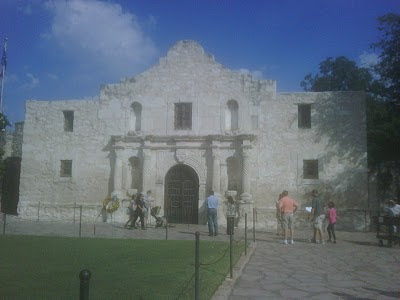


How can you NOT pay a visit to the Alamo, esp when it's about 3 blocks from our hotel? I love history and really enjoyed seeing this for the first time. Being from New England, I never had a true appreciation for what the Alamo means to Texans. You'd think it's considered a national historic site - and it probably is - but it's on a whole other level here. As the sign says, it's a "shrine" - and no pictures are allowed inside.
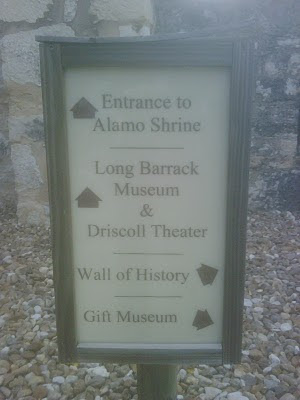


This sure is holy ground for Texas, and after learning more about the story, I realize this was their Boston Massacre. Am sure kids down here learn about that in passing, but my guess is that their history classes focus more about the Alamo. Texas really has its own sovereign identity that you just don't see anywhere else. So what is this a shrine to? Well, sure it's about independence and freedom, but around here, nothing embodies that more than guns. Frontier justice may be a thing of the past, but as they say, don't mess with Texas...

This brings me to synapse #1 - guns, Texas and Interactive.

At the Interactive general sessions yesterday, the stage props included some vertical towers with circular cut-outs for lights inside them. Like this:
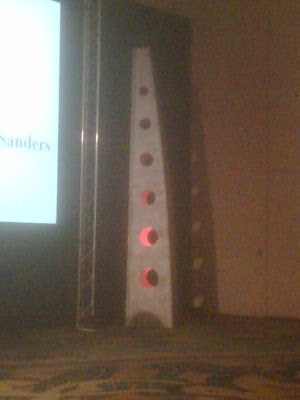


I have no doubt I'm the only person in the room who made an instant association of this with a well known building that leads me to synapse #2. Anyone recognize this building?
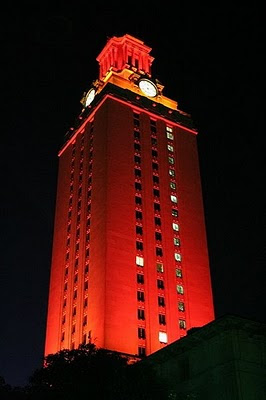


Unless you're from Austin or a big Elvis Costello fan, it's extremely unlikely you'll know what I'm talking about.

This is "The Tower" building at the University of Texas campus in Austin, which is not far from San Antonio. Locals will know why the building is bathed in orange - the color of the Texas Longhorns - and they light the building when their teams win. I get that - and found it a bizarre coincidence that the "tower" prop here at the conference was lit in a similar way.

None of this registered for me until hearing a song from Elvis Costello's country music phase called "Psycho." It's such a departure from his style, and the back story is incredible. The song was penned by a blind country singer name Leon Payne, and Elvis did this amazing version that has become one of my favorite tunes of his.

The song is a very chilling rendition of the Texas Tower Sniper massacre in 1966. Once you read the story, you just can't get Elvis's song out of your head. In short, the story is about Charles Whitman, who was a student there, as well as an ex-Marine. He was also mentally unstable, and simply snapped and went on a shooting rampage. First he stabbed his mother and wife to death, then took his rifle and ammo up the tower and opened fire on helpless students below, killing 16 people before being gunned down by the police. This happened WAY before Colombine, and probably set the template for these types of killing sprees that now seem to be the inspiration for video games. Don't get me started on that one. Anyhow, I have no idea what inspired Elvis to sing about such a morbid event, but he sure captured its essence - check it out if you're still with me here.

I've never been to Austin, but San Antonio is close enough by to make these unlikely connections work for me. It also reminded me of my 2008 trip to Dallas and my experience visiting Dealey Plaza, yet another landmark symbol of the U.S. gun culture, esp deep in the heart of Texas.

Oh - finally - you'll love this. As I'm writing this, the most bizarre tune is playing now on my iTunes - Pantera's "Cowboys From Hell". Aside from Psycho, I couldn't have picked a more appropo tune for this post. Could you?

Enough synapsing for now - back to the conference...

Interactive Intelligence Partner Conference - Day 1 Photos

On the road again. Been a very full day and night here - not even time to tweet. This is my second Interactive Intelligence conference, and they're doing a great job so far. About 400 people here, and lots of product updates and roadmaps. For now, though, I just have time to post some photos and will continue sharing as time allows - got an early start tomorrow.


Joe Staples


Don Brown - CIC 4.0 announcement


Alan Percy, AudioCodes


Tim Sanders, Deeper Media - keynote speaker


Lunch-time executive Q&A


CaaS breakout session

Smart Grid Summit - More Photos

Pushing content out today as fast I can. Here is my second set of photos from the summit. Lots of Twitter activity today around my recap article on the portal, and the feedback both online and offline has been great so far - nice to see that! Got some nice video clips in the can, and will post those on Monday - stay tuned.

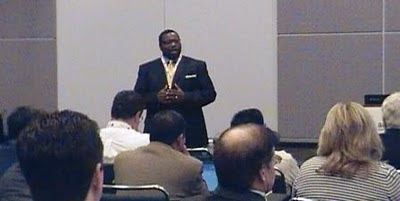
Sven Thesen, Better Place


Christoph Inauen, NSN


Lee Krevat, San Diego Gas & Electric


Steve Oldham, USTelecom


Dr. Mo Shakouri, Alvarion


Wireless broadband in the home panel - Jim Hunter - 4Home, Lew Brown - Z-Wave, Gabe Nave - SprintNextel


VC/startup panel - Chris King - eMeter, Gene Wang - People Power, Dylan Steeg - Intel Capital, Curtis Mo - DLA Piper, Dr. Pedram Mokrian - Mayfield Fund, Sam Smith - EV World (speaking about a hydro kinetic power startup)


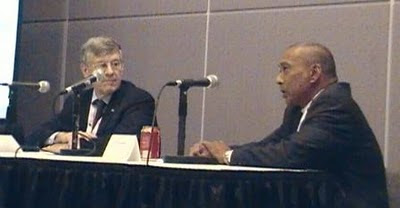
Jerry Melcher, EnerNex and Tim Boucher, Southern California Edison


Dr. Emir Macari, Cal State University


Jason Rodriguez, Zpryme research - presenting with me on our renewable energy market study findings


Prof. Raj Gadh, UCLA WINMEC


Crystal Ball session - Jay Cappy - Verizon Business, Jamie Clark - OASIS, Raj Gadh - UCLA WINMEC, Eric Murray - Tantalus, Katherine Hamilton - GridWise Alliance


And now...for something completely different.

Why on earth is there a photo of a Philly cream cheese container here?

Well, look closely - on the left - the green leaf - it says "made with Renewable Energy". Really! I sure did a double take when I was prepping my bagel just before we started Day 3. I thought that would be a perfect prop to kick off our Crystal Ball panel. When you start seeing messaging like this on mainstream products, you KNOW there's perceived value to this concept. I think I'm going to call Kraft and see if they'd like to sponsor our next summit! :-)

Next Stop - San Antonio and Interactive Intelligence

Got a lot on the go right now, and am only home from the Smart Grid Summit a couple of days, then back out again on Sunday. Next week I'll be attending Interactive Intelligence's Global Partner Conference deep in the heart of Texas. Am really looking forward to this, not just because I've never been to San Antonio (a true blues mecca - that's all I need to know), but because I so enjoyed attending their conference last year.

Am also excited because they're doing the Battle of the Bands again. This was a lot of fun, and I was part of a pickup group that performed. We didn't win, but the buzz told us we were a hit, so we're back again. The lineup will be a bit different, but I'll be practicing this weekend, and getting tips from my way-too-good-for-his-age son #2, Dean. If you like shred and metal, check out his YouTube channel. Too bad I can't bring him along as a ringer - we'd win for sure!

Smart Grid Summit - Photos

Just got time to quickly post some photos from Day 1. Got more coming for the rest of the event, along with some short video clips from the sessions. I'll also have a writeup about my thoughts on the summit for Friday, and that will run on the Smart Grid Portal.

Ernie Lewis, Verizon Business


USTelecom policy panel - Michael Oldak, UTC and Eric Batongbacal AT&T Services


Data privacy panel - Lee Tien, Electronic Frontier Foundation and Ward Pyles, Southern Company


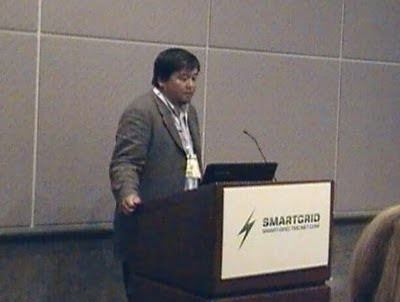
John Yu, LA Department of Water and Power


Ishak Kang, Dot UI


Gary Sorkin, USNAP Alliance


Team Alvarion, including Dr. Mo Shakouri and Eedo Lifshitz


Larry Lisser's hugely popular (and darkly lit!) Startup Bootcamp

Globe & Mail's New Design - Newspapers Aren't Dead Yet

So much to talk about here, and so little time as I prepare for next week's Smart Grid Summit in LA. I'm just going to cover the high points here, and will do more of an analysis in my next Service Provider Views column.

This post is about how a newspaper is re-designing itself to stay relevant - but it's equally applicable to the telecom world - and for that matter, utilities in the smart grid arena.

The Globe & Mail is Canada's leading national daily, and I've been reading it as long as I've been in Canada. Today's paper sure looked different, and for good reason. They've launched a re-design, and it's actually a bit confusing. It definitely looks sleeker, and visually, it's a few steps up. Every page has some color now, the paper stock is heavier - at least in some places - and there's even some glossy paper in certain sections. Conversely, at first glance, it now looks a bit like all those free "newspapers" that are everywhere, especially on public transit where they create ugly litter more than anything else. Free is hard to beat in any business, so I guess the Globe has to pander a bit to this crowd.

Anyhow, there's a bigger and more important story here. We all know how newspapers are struggling - dying even - in the digital world, and as iPads take over our attention spans, things are getting even harder. Even more than most other businesses, newspapers need to reinvent themselves big time.

You may not know it, but despite all this gloom and doom, Toronto's press industry is thriving. We have 2 big local dailies and 2 national dailies - all paid, not free - how many major U.S. cities can say that? I don't think this will last forever, but the Globe continues to do well - readership is up, the new paper looks great, and they are a leading innovator when it comes to their online presence. The U.S. media could learn a few things from the Globe if you ask me.

At the heart of all this, of course, is content, and this is where the Globe is on the right track. With today's re-design, it's clear to me that they've jumped curves - as Guy Kawasaki would say - from being in the newspaper business to being in the information and insight business.

I'll comment more about this in my next SPV article, and for now, I'll turn things over to the Globe's Editor-in-Chief, John Stackhouse. He wrote a great piece about the re-design, and I think he's right on the money. If you want to dive a bit deeper, there are hundreds of online reader comments, with mixed results. On the whole, though, the new look of the newspaper is a hit, but less so for the updated website.

Regardless, the important thing here is how the Globe is redefining its value proposition and relationship with its readers. They have to - there are simply too many alternatives out there for people to get their news.

I want to examine this story further, not just because I love newspapers - and care about what happens to them - but because I like their chances for reinventing the business. Both telcos and utilities are in the same boat, and if the Globe can do it, so can Bell or TELUS or MTS, etc. Same for Toronto Hydro, BC Hydro, Hydro One, etc.

Bottom line - all these businesses have large customer bases and their very raison d'etre is being challenged by the Internet. All these businesses need to be reinvented to stay relevant, and as the Googles and Apples of the world have taught us, sometimes you have to look to other industries for the right business model. I don't know if the Globe is truly there yet, but I think they're as far ahead of the curve as anyone in their space, and that's why I'm writing about them now.

Next Stop - LA - Smart Grid Time

Well, the Smart Grid Summit is finally here. It's been a long time since the last one, which means we've had a lot of time to get this one ready. It's ready now, and I'm flying to LA on Sunday.

If you follow my blog or my tweets, you'll know what's happening around this, and if not, it's not too late to get up to speed. Anyhow, if smart grid is on your radar, you won't be disappointed if you can join us next week at the summit. All the details are on the website, and if you can't make it, follow the tweets and check in with us on the Smart Grid portal.

Just to be sure, I'll reiterate that our summit is co-located with TMC's flagship event, the IT Expo. Now in its 11th year, I don't think you'll find a bigger or better conference anywhere in the communications space. Smart grid is very much about communications, and that's why we're there. Hope you'll be there too!

Metaswitch - Key Takeaways for SMBs on Focus.com

My latest Brief is running now on Focus.com. Having attended the Metaswitch Forum last week, it struck me that many of the key themes they were sharing with their service provider customers also apply to their customers as well - which are mostly SMBs. That happens to be a sweet spot for Focus.com, so it only made sense to build a Brief around that.

Hopefully you'll see things the way I do, but the only way to find out is to read the Brief, and then let me know - or even better, share your thoughts to keep the dialog going.

Talking About Unified Communications for SMBs

That was the topic of this week's UCStrategies podcast, and there was a lot to explore. The stars lined up for me to be on this call, and it was interesting to hear so many viewpoints about why/why not for SMBs adopting unified communications. The basic consensus was that a lot of education is needed and that the vendors/channels still have work to do to properly serve this market.

The podcast has been posted now to the UCS portal, along with a transcript if you'd rather just read it. Enjoy, and your thoughts are welcome - good, bad or indifferent.

Metaswitch Forum 2010 - Video Clips

Well, things sure get busy in a hurry coming back from a conference, especially with conferences coming up for me over the next three weeks. I finally got a chance to upload and prepare some video interviews from last week's Metaswitch Forum in Orlando. They take some time to post, as the segments are in HD, and I had to convert them to a lower resolution to show them here. Anyhow, here are six on-the-fly interviews - each is about 2 minutes long. I have other segments as well, but this will have to do for now - enjoy!


Cloud Telecomputers, Cheryln Chin - they're just coming out of stealth mode, and have a very nice touch screen "phone" - it's a pretty smart endpoint, and they have a nice twist on cloud services. They're also thinking ahead for mass adoption - the phone comes in two finishes - glossy for business and matte for consumers.


Doug Mohney, Fierce VoIP/HD Voice


Sigma Systems, Larry Polman


Ronald Gruia, Frost & Sullivan


Metaswitch, Carrier Systems Division - Dan Marcus - interesting discussion about how they build and support voice apps for their customers - and he's a pretty good songwriter too - my kind of guy!


Telax, Koray Parmaks - along with Ronald and Larry Polon, I'd say Canada was pretty well represented at the Forum!

Content Everywhere - Which is Best for Service Providers?

In my latest Service Provider Views column, I continue mining the theme about content. There's a lot to explore here, and this time I examine some of the practical issues facing both telcos and cablecos in their pursuit to own both the pipe and what goes through it.

The article is running now on TMCnet, and you can link to it here. I hope you like it, and as always, comments/suggestions are welcome.

Metaswitch Forum - More Photos

Last week's Metaswitch Forum was as good as always, and the company sure is doing a lot of things right. Problem with going away for four days is that you fall behind on so many other things. At this point I only have time to post some photos from Days 2 and 3. With the Smart Grid Summit zooming up quickly, I just don't have time for a thoughtful recap - but if you catch me out in LA next week, we can chat over a beer!

So, Plan B is to share some more photos, and there's a Plan C coming - hopefully tomorrow. I managed to record some on-the-floor walkabout video interviews at the Forum, and just need some time to upload them for the blog. Stay tuned - there's some good stuff there!


Andy Randall - Defining our Decade presentation


Chris Mairs - CTO outlook - very thought provoking stuff


Al Cook, Mobility session


Partner Expo - busy, busy


ADTRAN's UC solution


NTCA's Kevin McGuire


Industry outlook panel, led by MC Steve Gleave


Wrap Q&A with Metaswitch's exec team

Content for Service Providers - is this the answer?

The topic of content has been a big deal recently with service providers, and there are many angles to consider here. I just started exploring this, based largely on what's happening in Canada right now, and that's the focus of my latest Service Provider Views article on TMCnet.

I'm going to continue this thread over the next couple of articles, but am starting with the question around whether service providers should own their content or outsource it. Every situation is different, but it's a decision all service providers will need to make at some point. The article is running now, and you can read it here.

Metaswitch Forum 2010 - Day 1 Photos

Off to a great start here in Orlando. No WiFi in the conference area, though, so my day was not very productive Internet-wise, and I'm way behind on things like blogging and tweeting. Between meetings and sessions today, there really hasn't been any quiet time to write, so I'm just going to share some photos for now.

Am definitely hearing some strong messaging here about where Metaswitch is going and the strong foundation they're building on now. In short, the next decade for Metaswitch will be about globalization and maximizing the value they can deliver as a software company. This is not the same Metaswitch from a few years back, and their evolution path is as forward-thinking as anybody else's out there. They've grown a lot in 10 years, and there haven't been many steps backwards along the way. The management is very practical, and all their moves seem well thought out, and that's a good model for long term success. Below are a few examples to support that.


Bright and early before everyone filed in. They had a record turnout - over 750 attendees!


Steve Gleave - he's a great MC, and did a nice job highlighting all the decades since the invention of the telephone. Some pretty slick production values here, but they pulled it off really well.


Dr. Robert Ballard - special guest keynoter. He's the one who discovered the Titanic among many other famous sunken ships. Great choice for the event, and did a nice job tying the themes around the process of making scientific discoveries and how innovation often comes from very unlikely places. He also had some strong messages about education and the role that communications technologies can play to engage young minds in ways that we couldn't do in the past. I wish my kids had seen this!


Focusing on the technology - telepresence and fiber in particular - this was a live demo where Dr. Ballard spoke in real time with his explorer ship Nautilus in Turkey and what they were finding deep in the ocean. Felt like being on reality TV at times, but there's some real science going on here.


Afternoon panel session about applications


Party time at Universal City Walk - Kevin DeNuccio and Rich Tehrani


Karaoke time - with ADTRAN's Kevin "Supah-stition" Morgan - he rocked the house on this Stevie Wonder staple. Great band too!

Next Stop - Orlando, Metaswitch Forum 2010

Travel has been quite light for me almost all year, actually, but starting tomorrow, I have 4 conferences over the next 5 weeks, so this is my heavy time for being on the road.

I'm heading to Orlando tomorrow for the Metaswitch Forum 2010. Regular readers will know that I'm a regular there, and am usually one of a handful of outsiders - analysts and media - who attend. As you may know, this event was scheduled for the spring, but heavy flooding in Nashville nixed that, so here we are in September going to Orlando.

Should be a great event. It always is, but this being 2010, they have a longer-view theme to help us all think big - "Define Your Decade". Metaswitch also faces a challenging environment to maintain their impressive growth record. Their main rival, BroadSoft, has struggled with their recent IPO, and the same can be said for Mitel, who plays in an adjacent space to their market. Cloud will be a big theme, and having recently acquired AppTrigger, they have added service broker capability, and along with that, a broader focus on creating and delivering money-making applications for carriers. Lots to think about here, and I'll be posting and Tweeting as time allows in Orlando.

Cisco FY 2011 Analyst Update

As Cisco's universe keeps expanding, we all have to work a little harder to keep pace. One of the many things Cisco does very well is host sessions to update the analyst community, and probably more than any other company, they truly walk the walk. As with all vendors, they have near overkill on webinar and phone briefings - wouldn't you, if you spent $3 billion on WebEx? They do plenty of live events - which are always great - and with the magic of another expensive technology - telepresence - we get our share of virtual events.

Today was the virtual variety, and I was one of only two analysts in Canada who got the telepresence treatment at Cisco's Canadian HQ here in downtown Toronto. I've done a few of these, and it's always a good experience. The meeting synched up 5 locations - Toronto, San Jose, London and a couple of sites in the Boston area. They're getting pretty good at this, and the session definitely feels immersive and life-like.

The session itself was led by Frank Calderoni, EVP/CFO, and he did a pretty good walkthrough of Cisco's overall plans and growth expectations. Some of this was familiar from what I saw at C-Scape this summer, but quite a bit was new. He spent a fair bit of time reviewing their VSE mantra - these are the principles that drive the company - Vision, Strategy and Execution. It all makes sense, and is built squarely around the notion that the network is everything - it's the platform that "enables new business models and organizational structures". Fair enough. Every company has its culture and guiding lights, and it's very clear from this what makes Cisco go.

They layered a few other things on this, namely DNO and CPAD. This is first nature if you work for Cisco, and I guess it will become second nature to us if we stay with the program. If you must know, DNO is Dynamic Networked Organization, and CPAD is Cisco Priority Assessment Dashboard. We didn't have acronyms like this during my MBA days - but we didn't have computers either (there really was a time like this!). I'm sure if I did a re-fresh, these would be the kinds of best practices concepts that we'd be learning about.

Back to why we're really here. So, as we heard at C-Scape, Cisco has become an innovation machine, and the 400+ new products over the past year is impressive by any standard. They also have $40 billion in cash, so there's nothing they can't buy if the mood struck. Not surprisingly, they're now moving to issue a dividend - that idle cash isn't exactly earning much interest and shareholders need to be kept happy.

Looking forward, the main message is the growth outlook. They expect a 12 - 17% annual growth rate over the next 3-5 years, and Frank did a good job breaking that down. Most of this will come from overall market growth, and the rest will come from three main places. First will be growth from increased share of wallet they gain from customers as their product mix expands. Second will be growth from emerging countries, which are on a different trajectory than the developed world. Finally, there will be some growth from what they call "market adjacencies" - these are new spaces/verticals that Cisco is growing into, such as healthcare and smart grid. All told, it's a pretty reasonable picture, and if they can sustain this level, it will be a real testament not just to what they sell to their customers, but more impressively, how the company itself operates and executes on its plans. When you look at how many sectors and companies in the U.S. are poorly run (with some getting bailouts), Cisco is in many ways a great model for doing things right. That really was the main takeaway for me.

To be fair, of course, we all know that a lot of Cisco's forays into new spaces is by design, and steps on a lot of toes. Traditional partners are now becoming competitors, and there's more of an us-or-them climate out there than in the past. That's not really Cisco's problem, as they simply need to find new growth opportunities to get beyond the core router/switching business that they've done such a great job saturating. While this core accounts for 50% of their business today, Frank explained how they see the other areas accounting for most of the future growth. Right now, all these areas fall under the "Advanced Technologies" bucket, which today is 24% of sales. This includes pretty much everything that isn't routers or switches - telepresence, video, data centers, mobility, etc. They're betting pretty heavily on these markets - and I would be too.

There's a lot to keep on top of here, and I'm glad I attended this update. This is one of those companies that you can fall behind on in a big way if you stop following them, especially since they are so global now. For better or worse, they're too big to ignore, but they're doing right by me in terms of keeping us in the loop.

Bell Acquires Rest of CTV - the Plot Thickens

Not long after my Friday post about Videotron's mobile launch, came the news about Bell's acquisition of the rest of CTV. Technically, Bell's parent - BCE - did the buying, but the net result is not at all suprising. Without mentioning CTV, this development flows very logically from what my post was surmising. Now that it's yet another telecom-related front page story in Canada, I just wanted to add some quick thoughts.

There are many angles to explore here, and I'm just going to touch on a couple. In my view, Videotron getting into mobile is a much different scenario than Bell jumping back into the content game to strengthen their mobility business. First and foremost, Videotron is in the content business - mobility is just another channel for them. Their service will be aimed primarily at existing subscribers and will bind them that much closer to keep them running to Cogeco for cable or Bell for either IPTV or satellite.

Sure, Videotron will try to make some money on voice, but it's really about data and monetizing their content. What really works for them is the captive market they're serving for French-language content. It has the potential to be a gold mine once the concept of watching TV on a mobile device becomes mainstream. That said, I think this is a one-off scenario that only applies in Quebec, and I don't see the same conditions working for Bell.

Acquiring CTV levels the playing field in a way, and at least keeps Bell on square footing with Videotron. That's fine, but we're now talking about content for mass market consumption - well, English anyway - and that cuts both ways. If you like CTV's programming, then Bell is the carrier for you. But if you don't, then switching to Bell probably doesn't make sense.

The mobile market is too nascent to conclude that content is the key to success, and certainly, the new pureplays like Wind and Mobilicity will say it isn't so. The market is just not that homogeneous. Some people want a mobile phone just to make calls and text - nothing wrong with that. Some people want to surf the Web and access whatever they want/can on their smartphone - again, nothing wrong that. And I guess there must be a segment of the market that will choose their mobile provider based on the content they offer.

It's a bit like satellite radio with Sirius and XM. Each tried to build a subscriber base with exclusive content, and the mix of programming/personalities really determined who you would go with. It was all content - the pipe had no real value. This where I see risk for Bell going this route. If George Cope's Vancouver Olympics epiphany becomes their core strategy, their success becomes more dependent on content - mainly which U.S. TV shows they lock up - and less so on the pipe - which is much more important in this world than satellite radio. Anyhow, we all saw what happened there - the market didn't like to choose, and Sirius and XM ended up as one.

Exclusive content can be great for attracting subscribers - just remember that your competitors can do the same thing. If CTV loses cachet and subscribers prefer Canwest's content, then things get tricky. The cable TV model works so differently, since we can watch all the content from all the networks in one place. These mobility content deals are different, and it's too early to tell if they will be sustainable. I can see the time coming when these competitors will cross-license content for each other's networks. The business case will dictate the need - why restrict mobile distribution to one network when strong demand exists elsewhere?

And then there are independent networks - like the CBC of course - who will never be exclusive to one mobile operator. Where do they fit in this new world? Hockey Night in Canada is by far the most widely watched content on Canadian TV. Who's going to get that for mobile consumption?

Many questions here, and this world will likely unfold faster than the operators - and the CRTC - are able to manage. And we haven't even touched on Net Neutrality which is very much the essence of where this content convergence story is going. Lots to think about from the past few days, so I'm going to pause here, reflect a bit and continue another time soon. Thoughts?

Videotron Goes Mobile - Finally, Some Real Competition

Been totally backed up today, but I feel it's important to comment on yesterday's mobile launch from Videotron. I was all primed to be on the analyst call yesterday, but for some unexplained technical glitches I was blocked out and missed it. The window has since closed for me to comment in near real-time, but I did want to add a few thoughts while it's still relatively fresh.

The main thing I want to say - and haven't been hearing from others - is that Videotron is finally bringing some real competition to the Canadian wireless market. We all know how successful and disruptive they've been with VoIP in Quebec, and I think the same thing will happen here with wireless.

There's a lot to like about this news - unless you're Bell. First, this is the first major wireless play from a cableco since the AWS auction, so now we're seeing competition from a different side of the market. Of course Rogers is a cableco, and they're the #1 wireless provider in Canada - how cool is that? - but they've been in this from the beginning, and are really an incumbent for mobility. Shaw is actually Canada's largest cableco, and they've been biding their time for wireless. Am sure they want to see how Videotron does first, since they both are in similar positions in terms of what they can bring to market.

Another first of note is Android. Videotron is first to market to support an Android device - HTC. That will also be interesting to follow. They don't have the iPhone yet, but I don't think that's going to hurt them too much.

It's also worth adding that Videotron's launch is totally different from all the other new entries, which are built 100% around breaking into this market. They have to live and die by stealing subscribers with low priced plans or bottom feeding from first time wireless users who don't have much money to spend. In my view, there's zero innovation or disruption here aside from some short term pricing strategies to grab the low hanging fruit. But that's a treadmill with no loyalty - or contracts to keep customers from jumping to the next deal that comes along as they price shop at all those kiosks in the malls.

By its nature, Videotron has much more to offer, and they're chasing an entirely different piece of the market. First and foremost, mobility strenghtens the bundle to keep existing subscribers from running to Bell or Rogers. Secondly, they have what I think is the real differentiator - content. Videotron - more so its parent, Quebecor, is a media company. They're not in the telephony business, and their entry into mobility is not about voice. I've been writing about the post-AWS space a fair bit, and I've been saying from Day 1 what most people are just saying now.

Videotron doesn't really have to make its money on selling voice plans. Long term, it's all about data services and content. Mobility is really just another - and sexier - channel for their vast empire of content. Not just any content, btw. Sure, they have lots of mainstream stuff that everyone likes - but the real value of course is French language content. If you don't know the cultural landscape up here, you need to understand how important this is in Quebec. Videotron is a homegrown favorite, and you can be sure interest for this type of content will be off the charts. I don't think they'll run into pricing issues around this - they'll probably be more concerned that the network can hold up and meet demand.

Bell will really have its hands full now, and the more successful Videotron becomes, the more confident Shaw will be about their plans to go up against Telus out west. This type of competition is SO much more interesting than what the pureplays are trying to do, and with flanker brands like Chatr from Rogers coming to further clutter up the market, I just don't see these players having a sustained impact. For my money, as I've been saying all along, Videotron is the one to watch, and I'm sure Telus will be taking good notes to prepare for what's coming their way when Shaw is ready to go.

Google Voice - UCStrategies Podcast Analysis

Just before heading into the long weekend, the UCStrategies group managed to work in a podcast about Google Voice on Friday. It's a topic we were mulling over earlier in the week, but it took til then to get this pulled together.

For anyone following Google Voice, this was big news last week, and it definitely has implications for the unified communications space. Well, there's no better way to assess that than with the UCStrategies analysts, and the podcast has now been posted to their portal. And if downloading this is too much bother, the session has been fully transcribed and is included in the posting. Give a listen or give it a read, and by all means, share your thoughts with us.

Skype Connect - Making Strides for the Business Market

It's been a very busy couple of days in the world of Web-based communications. Between the news about Skype Connect and Google Voice, you'd think the world has moved away from landlines, especially in the home. Yesterday, I wrote about Google Voice on my Service Provider Views column, and that has all kinds of implications for both landline carriers as well as any form of Web-based VoIP offering.

Yesterday also saw a lot of activity around Skype Connect, which I think really moves them up the value chain in their quest to penetrate the business market. These developments are each of note in their own right, but it's interesting to see them coming at the same time. Google and Skype compete in some areas, but each also has its own distinct footprints elsewhere. In my latest Focus.com Brief, I explore Skype's news a bit further. There's certainly more to discuss, but this will have to do for now. You can read it here, and I welcome your comments to keep the dialog going.