ITExpo, So Far So Good

Well, it looks like TMC bet right with Austin. So far, the ITExpo has been great. I was busy on Monday for Editor's Day, and had a bunch of briefings yesterday. The keynotes were strong, as were the sessions I had a chance to check out. It's hard to gauge how big the crowds are, but there's lots of energy here, and everyone I talk to really likes the change in venue.

Most impressive for me has been the size of the show floor, which opened up last night. Much bigger than expected, and I heard that from a lot of people - very nice to see. Also, there were lots of new exhibitors, so new blood is welcome. Cloud is the trend du jour, and that's what stands out the most for me. That's driving a lot of new exhibitors, so it's taking some getting used to seeing this ecosystem here, but the time is right. Nothing wrong with that.

Back to the Expo now - I'll have more updates later. Until then, here are some photos...


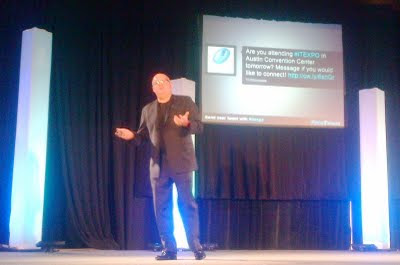
Rich Tehrani kicking off the Expo


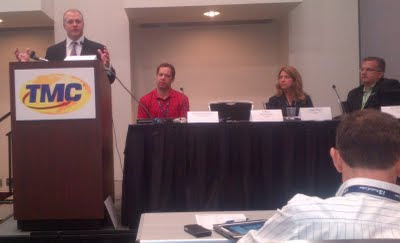
Mike Tribolet talking about Magicjack and how disruptive the VoIP space has become


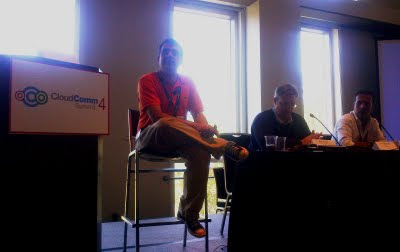
Thomas Howe leading a panel during the CloudComm Summit


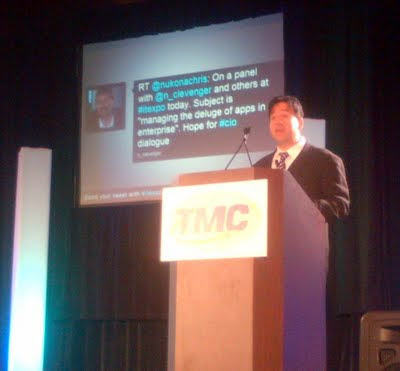
My UC Unleashed session from this morning, with Bill Bumbernick from Alteva speaking here. We had a full room, so kudos to everyone who came out for a 9am session!


I'm liking the Expo so far, but for me, this is the best reason to be in Austin...

Last call - tomorrow's webinar on remote working

Just a quick note about tomorrow's Focus.com webinar about getting more productivity from remote workers. I'll be presenting along with Polycom - my perspective will be about the trends and drivers around remote working, and they'll focus more on video-based applications as an enabler. It's not too late to register, and the details are here. Hope you can join us!

ITExpo Session - the Multichannel Contact Center Experience

This is the third in my series of posts in advance of next week's TMC ITExpo in Austin, Texas. If you've been to the show website, or follow the various email blasts, tweets, etc., you'll know there's a lot going on as always. The keynote lineup is solid, and based on the breadth of the program and strong roster of sponsors, I'd say the move to Austin is going to work out just fine.

My third panel next week is about the multichannel experience, and how this is impacting contact centers. We all use the tools - chat, text, social media, mobile, etc. - and expectations are rising from customers in terms of how they want to interact with agents. I've been writing about this pretty regularly on the Exony website, but let's stick to the topic!

Joining me will be fellow Torontonian Shai Berger from Fonolo, Kimberly Drobny of Fonality, and Christy Murfitt from Nuance. All of these speakers are living the multichannel experience, and if you're wondering why voice is no longer the only way customers engage with agents, you'll want to be with us.

Our session is on Thursday at 11am - we're on the Call Center Track - and you can read the full details here.

ITExpo Preview - What’s Really Driving the Hosted Customer Care Trend?

Just keeping the momentum going here for next week's ITExpo in Austin. I'm moderating three panels, and yesterday I posted about the first one. Today's post is about my second session.

As the title of this post says, we'll be talking about trends in the hosted customer care space. Regular readers of my blog will know that the contact center has been a recent focus here, especially where it intersects with Unified Communications. Just as hosted UC solutions are sprouting up everywhere, the same thing is happening in the contact center world.

To explain why, I'll be joined by Dena Skrbina of Nuance, James Dunn of TelStar Hosted Services, and Dave Van Everen of Five9.

We'll be starting bright and early at 9am on Thursday - we're part of the Call Center Track - and you can read the full session abstract here.

ITExpo Preview - Unified Communications Unleashed

TMC's ITExpo is just around the corner, and I'll be doing a series of shout-outs the next few days to let you know about my panels.

The first session I'm moderating is "Unified Communications Unleashed", and as the title implies, we'll be exploring how UC helps both companies and employeess get productive and stay productive. It's a pretty core driver for the UC value proposition, so your time will be well spent here.

Joining me will be Wes Durow from Fonality, Bill Bumbernick from Alteva (recently acquired by Warwick Valley Telecom - we could do a panel just around that!), Michael Marchioni of ICON Voice Networks, and Angie Reed from Digium.

That mix sure covers a lot of ground, so it should be a fun session. Join us if you can - we're on first thing Wednesday at 9am as part of the SMB track.

I'll be arriving on Monday, and prior to this session, I won't be hard to find in either of these two places:

- TMC Editor's Day on Monday - I'll be with their editorial team doing scheduled briefings and interviews

- Avaya's Technology On Tap reception on Monday night. If you haven't registered to attend, here's the link

While I have you, I want to be sure you're up on all the other co-located events running alongside ITExpo. Lots of great content happening there, and I want to especially draw attention to the programs being run by my good friends at both Crossfire Media - Carl Ford and Scott Kargman, and Principals Larry Lisser and Thomas Howe of Embrase (and by extension, Dave Michels from Pin Drop Soup).

Crossfire has a few events running, but the main one is their 4GWE Conference, and for Embrase, it's the Cloud Communications Expo. If these topics fall into your sphere, you won't want to miss them, and if I play my cards right, you just might see me up there during the Cloud Expo at some point.

Getting More From Remote Workers - Focus Webinar with Polycom

Just getting the word out about my next webinar with Focus.com. I'll be presenting along with Polycom on the topic of remote workers. This is a big trend that I write about from time to time, and it's worthwhile for employers so long as remote workers have the right tools to be productive. There are many ways to do this - and we'll be examining that during the webinar, and of course, Polycom will have their spin on things as well.

The webinar takes place Wednesday, September 14 at 1pm EST, and I hope you'll join us. All the registration details and the full webinar abstract are here on the Focus.com website.

Gartner's UC Magic Quadrant Review

This was the topic of our latest UCStrategies podcast. Gartner's Magic Quadrant always gets a lot of attention, and there was lots to talk about here. Each of us in the UCStrategies group has a distinct perspective, and I had a few takeaways, namely:

1. How well Cisco fared considering how voice/telecom-centric their quadrant analysis is, along with the fact that Cisco is so strong in other areas that touch on UC

2. How well Microsoft is faring with Lync considering their lack of voice pedigree. I also noted it was nice to see the report acknowledge the Skype acquisition, which I think is a huge wildcard in this space.

3. Nice to see Mitel get recognition among the second tier vendors; they were the only vendor to fall into the "Visionaries" quadrant - this being a nod to their focus (more like betting the farm) on virtualization.

Lots of good insight all around, and if you want some lively debate about the state of UC, you should enjoy this. The podcast was just posted today on the UCStrategies website - here you go!

Would you buy a shirt from this man? Remember Woody Allen's "Sleeper"?

If you're a regular reader of my blog, you'll notice something different today. The bots and automated search algorithms that only scour keywords but don't actually read anything won't notice, but if you have two eyes and a brain, you will.

I've been blogging since 2005, and I love to write. Those who know me will know that my blog has never been a commercial venture, and I have this old school Church/State thing about keeping my content/thought leadership separate from the pressures of making a living. For that reason, I've always maintained a separate website for J Arnold & Associates, and that's where you go to learn about my practice and areas of expertise. As I always tell people, my blog is where I do my telling, and the website is where I do my selling. Fair? I think so.

So, what's new today? OMG, there's a banner ad at the top of the landing page! What's that about, and why there an ad here for a... tailor - huh?

Ok, so let me explain. I've never done this before, but am happily giving it a try. Here's the story. I get a lot of inquiries and offers from outside tech/telecom - some of it is way off base, some want to tap into my traffic and some really like my writing.

Generally, I only write about tech/telecom here, but will occasionally write about the Red Sox, Americana, music, film and culture - and I could easily create standalone blogs and write endlessly about any of them. Any sponsors out there?

A few weeks back, I was contacted by Modern Tailor, and as you can guess by now, they do everything on the Web - a very modern take on tailoring. I'm old school enough that I still like suits and dressing well, although that seems so out of place in telecom. I don't shop online much, but I'm interested in their products, so we're doing a small contra deal.

It's not that big of a stretch, really. My readers are consumers too, and the males buy shirts and suits from time to time. If the ad catches your eye, hopefully you'll click through to their site, and you might even give them some business. In return, I get to try some of their handiwork, and if all goes well, we'll keep it going.

As Harvey Fierstien used to say, "is that so wrong?" Well? I don't think I'm compromising my analyst integrity, and I happen to love nice shirts. No money is changing hands, and we're both trying something new. I'm dipping my toe into the Wild West world of Internet commerce...

So, now for the really big question - would you buy a shirt from this man? I've never understood why people would buy personal attire like clothes and shoes online, unless they knew the fit was good. I've come across a few online tailors like Modern Tailor (mostly for shirts, mind you), so they must be doing something right.

I don't know about you, but the first thing that popped into my head was the scene from Woody Allen's futuristic Sleeper, where he gets fitted for a suit by a robot tailor. If you haven't seen it (or it's been forever since you have), take 90 seconds now and check out the clip.

Nu, so you vant a suit? Plain or fancy? This scene says it all, but I'll close here by telling you my first experience with Modern Tailor was exactly the opposite. They have a great process, a virtually unlimited pallet of options, and the fit was great. If you trust me for my telecom writing, I hope that transfers to Modern Tailor! It works, and I'll be back for more.

That's my story, and if you're still with me, I'll be writing a more detailed review shortly about the process and results so far with Modern Tailor. It works for me, and if you have your doubts, you'll want to read my review.

Social Media and Contact Centers - a New Way of Listening

Although you can't tell from their website, the Exony folks have been keeping me busy lately, and the fruits of that will start coming next month. Hey, that's a day away, isn't it? I seem to have missed summer - time sure zooms, and before you know it, I'll be in Austin at TMC's ITExpo. More on that next week, and if you're going, please come to my sessions!

So, I've been doing a fair bit of ongoing research about the impact of social media on the contact center, and my latest set of insights was posted today. This is the third instalment in a series I've been writing from my research, and one more piece is in the works now.

My focus here is how social media requires contact centers to listen in new ways, both literally and between the lines. Aside from being new, social media has many nuances, and it's not enough to just take every tweet or IM at face value. This type of content may often be sparse and brief, but much like body language, it's often laden with unspoken meaning - and that's what makes it social.

Enough preamble - it's time to go straight to the article on Exony's website. Give it a read, close your eyes, reflect, and share your thoughts! And then, like a good social media acolyte, re-tweet this to 10,000 of your closest friends.

The Future of the PSTN

How's that for a big topic? I think about it a lot, but its demise looks increasingly inevitable, especially the way the FCC is talking these days. Much like the railroads, when the system becomes too expensive to operate, the operators start making noise and giving reasons why it needs to be scaled back or done away with altogether.

I can see this unfolding at some point, but am also of an old school mindset that says the PSTN still has value - it just needs to be reinvented. Back in the 50's, when the U.S. Interstate highway system was built, it provided a huge boost for the auto industry, and train service has been on the decline ever since. In essence, the highway was simply a better way for people to travel, and the same argument can be made for why landlines are rapidly giving way to VoIP and mobility.

However - the trains run just fine, thank you, and in some markets have regained their appeal - especially where the highways have become way overcrowded and add a lot of stress to the daily commute. Of course, providing WiFi sure helps, and for a lot of people, the train is a far more productive form of commuting. I'd like to think the telcos might come up with similar brainwaves at some point, as the PSTN still has virtues - security, hello - that VoIP or mobility simply can't match.

Enough said. I could go on quite a bit here, but it's time to transition this to the podcast. I've missed several of the recent UCStrategies podcasts, but things finally worked out for this week. So, if you want hear how our group is weighing in on this topic, you can give it listen now. What do you think?

Oh Blogger, Where Art Thou?

Just popping in to say I'm still here! This may be the longest stayaway since I started blogging back in 2005, but I'll get back to posting this week. Been away on vacation, and that 100% means no blogging. More importantly, I've been busy on projects, and have just completed a pair of white papers for a vendor most of you will know that should launch any time now. I'm also in the final review phase for another white paper with a major IP comms provider that all of you know and use. Finally, I'm in writing mode now for yet another paper in the video space that will be out in early September.

Aside from that, my regular writing continues on both the Exony and ADTRAN portals, and one of those is about to ramp up later this month. I also have a number of proposals pending for new projects, so the pipeline is looking pretty good going into the Fall. Speaking of that, TMC's ITExpo is now just a few weeks away, and I'll be busy there, moderating three panels.

We may be in the home stretch of summer, but the work goes on. Last week was a good recharge, and I'll be back to blogging and tweeting soon enough.

ITExpo, Austin - 39 Days and Counting...

I don't usually talk up my next conferences this soon, but things are ramping up now for my participation in the next ITExpo. Regular followers will be familiar with my long history with TMC, and this expo should be pretty cool.

The West edition of their show has been in LA the past few years, but 2011 marks a shift from there to Austin, Texas. It's always great to be part of a change, and as a bonus, I've never been to Austin. That in itself is reason to be jazzed, since Austin is one of the top spots anywhere for two of my big passions - live music and food. More specifically, ribs, BBQ and the blues. Yahoo!

Back to work now. The ITExpo is a short 39 days away, and if you haven't made plans yet, you should check out the conference agenda here. I'll be talking more about the program and speaker highlights in upcoming posts. As usual, I'll be busy moderating - am running three sessions - two on contact centers and one on UC:

- Wed. at 9am: UC Unleashed

- Thurs. at 9am: Hosted Customer Care Trends/Drivers

- Thurs. at 11am: Harnessing Multichannel Customer Service Tools

Along the way, TMC will be doing various things to build momentum for the Expo, and I'll be participating during their Editor Day on Monday. I was also just interviewed by TMC for my thoughts around key trends in UC, and the article was posted earlier today. You can read it here, and if you come see me at the Expo, you'll get a more complete picture of what I'm seeing - not just from me, but my session speakers as well. After that, if you're into the blues, let's go on the town.

Social Media and Contact Centers - Part 2

I've been writing a column for Exony over the past few months, and it's been a great opportunity to explore how IP and hosting are impacting the contact center.

My most recent thread has been about social media's role in the contact center, and the more research I do, the more layers keep peeling back. My most recent analysis is running now on Exony's site, and the theme is unintended consequences. I'll let you think about that for a moment, and hopefully your curiousity will be piqued. At that point, zip over to the site, give the article a read, and let me know your thoughts. Part 3 is coming soon!

ADTRAN - Continued Growth, All Good

I had a briefing yesterday with ADTRAN to discuss the highlights of their recent Q2 results, and while this may be old news for the financial community, it's still worth noting for anyone that doesn't follow the company closely - and if you're in telecom, you should be.

I've been following ADTRAN for some time, and while they may not be a household name in telecom, I'll take their numbers any day, especially given how majors like Cisco and RIM are facing some big challenges now. As publicly cited, revenue and income are both growing and are at record levels. Getting growth in both areas is not easy, and speaks to how well the company is being run.

This last statement may sound like motherhood, but when you consider the vast range of both product lines and businesses they serve, ADTRAN has a lot on the go. They may not have the brand recognition of Cisco or Avaya, but the growth is there, and more importantly, they're making money. I'd say they're about a year away from hitting $1 billion in sales, and with $150 million of liquid capital on hand, they're certainly in a position to shape their roadmap.

There's still a lot of legacy out there, and a big part of their business is helping customers transition to IP. It's easy to think we're in an all-IP world, but businesses still have lots of interop challenges to work with both existing and new network elements. Looking ahead, I was updated on the progress they're making with vertical market UC solutions, virtualization and cloud (esp their 10 Gig Netvanta interfaces), and support for carriers rolling out IPv6.

ADTRAN covers more ground than most vendors, and there's always the risk of being spread too thin, but their growth metrics indicate otherwise. This was clarified in the briefing, as growth is coming from both hardware and software product lines - not just in the U.S., but overseas as well. So long as this trend continues, my only caution is a view I've held for some time - the company culture is still pretty product-centric - and while this is ideal for switches and routers, a different language and mindset is needed for service-based offerings like UC or hosted. This type of shift takes time, and I'm optimistic they'll get there. Who knows - with all the Cisco layoffs, something tells me they're getting a lot of resumes now, and that might help them get there faster.

Telesphere - Taking the Cloud to Market

Yesterday I got briefed on an announcement that just went live today. Wanted to share it with you, as I think this is a great example of where things are heading in the hosted services/cloud space. The company is called Telesphere, and now that I think about it, our paths crossed a few times a year or so ago, but based on today's news, they're ready to make some bigger noise.

In short, they've launched an end-to-end cloud based solution that should find a solid niche with businesses who don't want the hassle of managing their communications systems or the capital expense of upgrading to IP. As the release explains, Telesphere brings their own MPLS network, and they've partnered with three leading vendors for the complete solution - BroadSoft, Polycom and CounterPath.

There are several moving parts here, and I'll keep this simple. Unified Communications is a moving target to define, but everyone gets the basic premise about integrating multiple modes on to a common platform. Telesphere offers a variety of flavors to suit different use case scenarios, but the main focus for them is video. Having come from Cisco C-Scape recently, it's not hard to see why vendors are pushing strongly down this path - there's more money to be made than with voice, plus it's actually a better way to communicate.

With that, I'm going to be pretty video-centric here in talking about Telesphere. The core offering in the launch is called VideoConnect, and it's exactly as it sounds. Telesphere has put all the pieces in place to support a cloud-based videoconferencing service that works on most all key endpoints. BroadSoft and Polycom already work together with BroadCloud Video, which supports up to 12 participants, and being standards-based, will work with most standards-based video deployments, including big screen systems and tablets. Counterpath adds support for desktop video with their Bria softphone application. Smartphone support is coming, but for now, there's a lot to consider here.

We all know that some people love using video and some don't, but there's no denying how it adds value in the workplace. One key challenge is the firewall and connecting video across different enterprise networks. Telesphere has addressed this in the cloud, so they can serve as a hub of sorts, through which video traffic can pass among their customers. In keeping with their best of breed approach, they're using Acme Packet for the SBC component - not only does it interop with all the leading network vendors, but it can scale to whatever level Telesphere needs.

Once businesses see the value of this concept, they become believers when they experience both the ease of use and high quality. In the IP world, videoconferencing is no different than making a call - it's reservationless, and just requires dialing up an IP address. The quality comes through via HD audio and video - even on the desktop, and when end users see this, it's hard to go back to everyday phone calls or low res video chat. Plus, management will like the fact that one-to-one video sessions are free, so long as they're running over the LAN.

Being a cloud-based and managed service, Telesphere is also playing up the Capex-free angle. This can be a key value driver, as businesses don't need to make a big investment to have video, and if they do need endpoints, the cost can be built into the monthly service charge rather than coming from a capital budget.

For now, VideoConnect will largely be a line extension for Telesphere's existing customers. However, if the expected traction materializes, they'll have a proof of concept to warrant pushing this out into the broader market. Their MPLS coverage is nation-wide, so they can sell into any region, as well as support businesses with branch offices across the country.

If all this comes to pass, I think Telesphere will have a new model for the cloud communications space. I've always believed that owning a network gives you leverage for sustained growth, and everything else can built up through partnerships and the best-of-breed approach. That's exactly what I'm seeing here, and it shows that you don't have to be a Tier 1 carrier or vendor to succeed. Once you've adopted the cloud as the home for communications - and that's still a big leap for many companies - all bets are off in terms of who can best deliver those services. Google is certainly poised to do this, and Microsoft is working hard to get there, but for now there's plenty of room for companies like Telesphere make the model work and truly bring high-value video to the workplace.

ShoreTel Conference Recap – Brilliantly Simple, Sort Of

ShoreTel is a company that’s definitely doing things right, and while I’ve only been following them closely for about three years, they’ve come a long way during that time. Having come from Cisco’s event last week, the market share lines are clearly drawn in the IP telephony space. In North America, Cisco and Avaya/Nortel hold about 75%, which doesn’t leave much for everyone else. The playing field has inevitably thinned out, and for anyone else to crack double digits in share, that would be a pretty big achievement.

As in any market with this type of structure, there is room for a few Tier 2 players that will collectively grab maybe 20%, and the remaining 5% will go to a fragmented field of Tier 3s who are barely hanging on, or have found a defensible niche. ShoreTel is clearly in the Tier 2 group, and the case can be made – and they had industry data to show it – that they are the top player in that stratum of the market. Sure, there’s a huge jump up to the Cisco/Avaya league, but Tier 2 is still a big space, and ShoreTel can do very well here without worrying too much about who’s above them or the multitude of Tier 3s down below.

Just like last year, it was easy to see the strong rapport that ShoreTel has with their partners, and that goes a long way to explaining their momentum. Being a public company, there were plenty of proof points to support this, and I tweeted several of them during the event (#shor11). In terms of my key takeaways, I’m going to focus on the messaging we heard, both in the keynotes as well as the various personal briefings and hallway banter.

I’ll start at the top, with CEO Peter Blackmore. He came across as a serious, credible leader, and presented a pretty sound vision for ShoreTel to make the most of their market opportunity. The unspoken message is to beat Cisco – where they have had their share of success – but the clearer message is to present a great offering that the market can understand and see value in. This is the root of their “brilliantly simple” tagline, and with all the complexity around making IP technology actually work, it resonates nicely with both customers and channel partners.

I’m not going to rehash the details, but he set the stage explaining the market drivers they’re trying to capitalize on. Mobility is the big one, and this was a strong theme during the event. Video was big too, but secondary to video. They’re a bit behind the curve on these fronts, so there’s a lot of hasty catching up going on here. However, we have to remember that a lot of businesses wouldn’t know what to do with a soup-to-nuts collaboration solution, so there’s a still a window here for ShoreTel.

Peter Blackmore stated an ambitious goal of reaching 20% market share from their current level of 9%, and that would really put them in the big leagues. A lot would have to go right, especially in moving up-market – and wrong for their competitors – and he identified building the right mix of channel partners as the key for doing this. There was a lot of talk around how they’re supporting their channels, especially in terms of having no conflict. This clearly is a pain point for channels with other vendors, and ShoreTel looks to have a good plan here.

I could go on and on about all the positives their executives shared with us (I need to be balanced and fair!), and taken at face value, it’s not hard to understand why they’re winning business and why their stock price has doubled. If you’re a fan, the strong financials make them poised for a good run, and possibly to make some acquisitions. If you’re a doubter, and still think about the old ShoreTel, you’ll point to their lack of profitability, and perhaps say they can’t scale enough for enterprise customers. You didn’t hear much about the latter at the conference, but given the history, these things can’t be ignored either. Overall, though, I like their chances.

So, what’s to worry about? Well, “brilliantly simple” can be a differentiator so long as you can deliver it. Clearly, ShoreTel has done this, but it’s largely been with voice and fairly basic deployments. On one hand, there’s a huge market around this, and their CEO noted that only half of the market has moved to IP. The opportunity is easy for businesses to understand - and for channel partners to sell/support. If that was the extent of the business, we could all go home happy.

As mentioned, mobility and video are just now being added to the mix, and while it’s early days still, these are much harder to keep simple. I have no doubt they will get all these pieces to work, but as we saw from various demos and briefings, there’s a ways to go still. Their acquisition of Agito gave them some FMC expertise, but mobility is not native to ShoreTel’s R&D DNA. When the bigger players talk about collaboration, conferencing, social media, mobile UC, SIP trunking, etc. it’s pretty clear what these look like and how they work. You don’t have the same sense of that yet with ShoreTel. For example, their Polycom videoconferencing endpoints only work with each other, and aren’t yet integrated with the desktop. That’s ok – they’ll get there, and I think they’re realistic about where they can compete successfully here.

I guess it all depends what you’re comparing this against. CEBP is not on the ShoreTel menu yet, but does it need to be? They know their market, and they know what their partners are willing/able to support. These capabilities are really not big drivers yet among their core customers, so they don’t have to be best-in-class here. The challenge comes in trying to make mobility and video as “brilliantly simple” as voice. I don’t think anyone has been able to do that yet, so if they can truly pull this off, they’ll really have something special.

I’m not alone in wondering how quickly all this will come together. If their roadmap takes too long, there’s a real danger of businesses finding ways to do what need to do with Lync, at which point ShoreTel doesn’t have much to offer beyond voice. Similarly, if mobility and/or video take things from simplicity to complexity, they’ll undermine their core business. That’s a tricky balance to strike, since they need to succeed with both channels and customers.

Now it’s easier to understand why they’re using a two-tier channel model, and why so much emphasis is being placed on expanding/enhancing their partner base. It’s no secret that data VARs are not created equally when it comes to voice – and vice versa. This is a different sales pitch, and it has to work for the channel as much as for the customer. ShoreTel certainly isn’t alone here, but they definitely have a lot riding on keeping things simple.

In short, I think ShoreTel has a strong hand, and the market is theirs to lose. They’re also late to virtualization, and that’s a dual-edged sword. If it happens too quickly, the core business is cannibalized, and the XaaS model is harder for channels to understand and monetize. On the other hand, if other vendors have better virtualized offerings, the business may go that way among customers who decide to go all-in.

On the upside, there’s a lot to like about ShoreTel – the little engine that could. This also came out in the closing keynote by Joe Theismann – yeah, the football guy. Boy, was he good. Motivational speakers are pretty predictable, but I thought his message worked really well. He talked about teamwork and the need for channels to work closely with ShoreTel to get the results. He had great analogies and stories from his playing days, and they apply very nicely to what the conference was all about. So, lots of positives to build on, and it’s pretty simple for me – if they can keep it simple, they just might get their 20% share – and if they do, Joe will no doubt double his fee to come back, but it will be worth every penny.

ShoreTel 2011 Conference - Day 1

Busy schedule here, but so far, the ShoreTel Mobilize for Growth analyst/partner event has been great. Solid growth story here, and I really like the leadership team they've put together. I've been tweeting regularly and taking notes during the sessions. For now, I just have time to pass on some photos from yesterday. After things wrap up today, I'll have time to reflect a bit and will have something worth reading for you then.

Hey, it's Chicago - what else would you expect for an opening?


CEO Peter Blackmore - I liked his vision and sense of purpose for growing the company - sounds like they're in good hands here.


Don Girskis leading a panel with three high-growth partners and hearing how they got such great results


CMO Kevin Gavin's silhouette and the mysteries about how marketing is helping ShoreTel succeed

Next Stop - Chicago and ShoreTel

Second week in a row of travel - tomorrow I'm attending ShoreTel's analyst and partner event, titled Mobilize for Growth. The event is in Chicago, and it's a safe bet it won't be as hot weather-wise as Cisco's event last week in Las Vegas - phew.

Catchy title - this year's ShoreTel conference continues the momentum from last year's breakout developments that have put the company on a strong growth track. And of course, mobility itself is another big theme, and I'm sure we'll be hearing all about that in Chicago.

ShoreTel may not do things as big or fancy as Cisco, but they put on a solid event, and with a strong core of happy channel partners, they look to have a defendable niche in this crowded and messy market space. Also, now that their new CEO - Peter Blackmore - has a year under his belt, it will be interesting to see his roadmap for 2012. I'll share the highlights and Twitter away as time and WiFi allows!

Cisco C-Scape - More Takeaways, Photos, Deaf Culture, the Human Network and The Godfather 2

I've got some not-so-random thoughts to share from the last 2 days of Cisco C-Scape 2011. I'm not your typical industry analyst, so my take here is a bit different, and I just might get you to see collaboration a bit differently. If you want straight up analyst coverage, just mine the Twitter feeds that have been going non-stop.

Overall, the event has been as advertised - huge, splashy, very well run, and plenty of access/exposure to executives across all lines of business. Definitely worthwhile, and Cisco keeps the bar very high for giving analysts what they need.

Cisco Live is the big piece of this event, and they had over 15,000 partners in attendance - with another 40,000+ following via the Web - that's pretty impressive. If you weren't with us, here are a few photos from the keynotes. I've got another one later in this post, so keep reading.


Opening number - no, this isn't an audition for Hair or Godspell - but a great warm up for John Chambers. This was a faux flash mob that started out in the aisles and then took over the stage. It was about as unscripted as a reality TV show - totally not, of course! - but very fun and very Vegas.


Jim Grubb walks John Chambers through a vertical market demo of various collaboration applications. This was for the oil and gas sector - very compelling and more plausible than last year's demo for collaboration in the school classroom.


Padmasree Warrior's keynote


So, collaboration remains the main story for Cisco, but they made it clear that routers and switches are still the core of their business. Cloud is a big part of their roadmap, but they remain married to the mantra of the network being the driver for collaboration.

To deliver on this, we heard a lot about their commitment to innovation and architecting networks that help businesses achieve their goals. John Chambers talked about how we're shifting from an information economy to a networked economy, where value comes not from moving information around, but in finding experts who can help businesses solve problems right now. The demo cited above was a great example of this, where they used Quad to source an expert to help solve a remote pipeline maintenance issue.

Moving on, much of our time was spent in small scale briefings, and that was a great way to get interactive updates on various areas of interest. There were a lot of these going on, and it didn't take long to realize there was a small army of analysts there, many of whom are way outside the realm of colleagues I work with. Cisco has become that big and expansive that you need this many people to understand the full picture. Of course, that's also part of the problem, and we heard a lot about how Cisco has had to re-trench and focus on a more manageable customer set.

Ok, so let's move on the cryptic references in the title of this post. Let's start with The Godfather. If your mind works like mine, you'll have figured this out by now. Anyone who has seen John Chambers speak knows that he's absolutely the best - nobody commmunicates as smoothly as he does. He's got that perfect blend of business focus, folksy Southern charm, an Atticus Finch sense of lawyerly measured conviction, and the cadence and gleam of a preacher. The audience is always in the palm of his hand, and with 15,000 in the room, that's pretty impressive.

This was a very happy audience at a very upbeat event - the Pimp My Router routine was hilarious! - but while all this was going down, all I could think of was the fantastic climax of The Godfather, Part 2 (has there ever been a better sequel film?). C'mon, you remember - how calmly Michael Corleone goes about his business while his grand plan to consolidate power unfolds with a series of brutal, fast-cut executions and takeouts. Coppola - and Pacino - at their best.

As we all know, there has been lots of coverage about Cisco layoffs as part of the aforementioned retrenching. On Monday, the talk was 5,000, then on Tuesday it was 10,000. Whatever the number ends up being, it will be a lot of people out of work or taking early retirement. I'm not saying this is a heartless move - in fact, during the analyst Q&A, John Chambers was very candid about the care they take with employees. However, everyone knew this cloud would be hanging over the event, but you'd never know it from listening to the keynotes. :-)

Now, let's talk about two other Cisco mantras from the event. First is a tag line they've been using for a while - The Human Network. Hold that thought. The other one is listening. John Chambers had a customer-centric theme in his keynote - "you ask, we deliver". I like that - short and to the point. All successful companies do this very well - they listen and learn, and I've always had the sense this was a hallmark of Cisco.

However, I didn't realize how true this really was - figuratively and literally - until I noticed something that I highly doubt ANYONE in that arena of 15,000 people picked up on. The photo below isn't great, but I'll explain. Her name is Angie Beachley, and behind her, Padmasree Warrior is giving her keynote. So, why is Angie facing the audience, and why is she so animated?


Simple. She's a signer. Sitting across from her in the front row (not pictured) is Bryan Dixon. He's with SAIC (and NASA), and a NetVet as well. Bryan is also deaf, and Cisco provided a signer so he could follow along. I noticed the same thing on Tuesday, where a different interpreter - Rod Voris - was used.

I wouldn't expect you to connect these dots, but I've grown up with Deaf Culture, as my youngest brother is deaf. As I chatted up Bryan through the interpreter (I don't know sign language), I learned that he went to the same university as my brother - NTID - National Technical Institute for the Deaf. A number of things struck me about this that add some color to the world Cisco lives in.

First, we take it for granted that all the powerful tools we have for collaboration and Unified Communications work for everybody. Try telling that to those who are visually or hearing-impaired. It's really tough when you can't see, but deaf people can at least pick up the visual cues. I have known for years that the deaf community is actually a tailor-made market for many of the tools we rely on. My brother and his friends don't talk on the phone of course, but they text and chat like crazy, and video is perfect for them. If you've ever been around a group of deaf people conversing, you'll notice right away that sign language is incredibly rich and nuanced in ways that speech doesn't have.

I'm not saying for a minute that Cisco should view the deaf community as another vertical market. However, I have no doubt that people like Bryan Dixon can help Cisco make these tools more engaging and inclusive for everyone. It's really hard for deaf people to get regular jobs, but in the world IT, I think they can do incredibly well, and teach others how to make sharper use of all their senses. If this isn't The Human Network at work, I don't know what is.

I wanted to add a coda to this from yet another unlikely source - football. American football is without a doubt the most complex and collaborative of all team sports. I'll bet you didn't know there's a deaf college football team. Gaullaudet University is in Washington D.C. - it's the only all-deaf university in the world, and they've had football as long as any Ivy League school. Until recently, do you know how they sent play calls in from the sidelines? They bang a drum, and the QB picks up the vibrations, which come in code. Pretty neat. They also invented the huddle way back when as a way to prevent their opponent from seeing the play calls which were signalled using sign language. Here's an article if you want to check this out further.

So, what's my point? Well, look at how ingenious all this is - no matter what faculties you have, it's in our nature to find ways to communicate and collaborate. The deaf community has learned this in spades, and believe me, a lot of deaf people think we're the ones with the handicap - and they wouldn't want it any other way. This is a different and long-winded take on collaboration, and I'm just trying to say it's a very human process, whether one-to-one or one-to-many. In my view, this little sidebar validates for me that Cisco is on the right path with collaboration - perhaps more than they realize.

The world needs more people like Bryan Dixon to make us aware of the full potential for how we communicate and share ideas. However, we'll only get there if the focus is on human communication - the technology is a means, not an end. So, kids, stop walking and texting with your head down, and look at what's in front of you in real time - then you just might bump into Bryan one of these days.
Cisco C-Scape - Day 1

Just wanted to get a quick post out about C-Scape 2011. Yesterday was an analyst-only session, so we were in our own world most of the day. The event kicks off in full form this morning, so I'll have more to say in my next post.

Our session yesterday was focused on collaboration, and more specifically the roles played by Jabber and WebEx. It was nice to devote this much time to collaboration, and it was great to hear - and discuss - their roadmap and vision about how these tools add value. Collaboration can mean a lot of things, and vendors tend to define it in terms of their offerings, but buyers already know that. In this forum, Cisco takes the network-centric view, so it's an inside-out approach, which makes IT happy. Contrasting that, though, is the struggle to meet rising expectations as employees keep bringing new personal devices to work and wanting to use them on the job.

We didn't drift too much over into social media - the focus was very much about enabling team work, often using video. Over the course of the sessions, we saw several on the fly demos using WebEx and demonstrating the Jabber interface, which incorporates just about everything you could ever need around presence and real time communications. The details were a bit much for me, but clearly, when all the pieces are integrated like this, the collaboration story becomes very strong.

Not surprsingly, the emphasis was on enterprise, so there wasn't much talk about this might play out for SMBs. That's fine - enterprise is Cisco's strong suit, and this is where the most money is spent. Inevitably, there was a lot of talk about Microsoft Office integration, and Android support with Cius, so it was impossible to avoid the other giants in the room. This leads me to another key takeaway, which was a repeated message about interoperability and open systems being key drivers for collaboration. Cisco has a lot riding on Cius gaining traction, and they know that no single vendor can truly do everything.

All told, the first day was well done, and it was great to get that much focus on an area that is so critical to Cisco's future. Time to go now, and get started on Day 2, which is where most of the activity will be during C-Scape. Back soon.