Cisco Summit - Final Thoughts: "What's UC?"

I promise this will be my last post about Cisco's Collaboration Summit! As part of the UCStrategies team, I contribute a monthly writeup to their portal, and aside from everything I wrote around the event, I had some specific thoughts on where UC fits into Cisco's plans.

Well, based on my takeaways, it's not much, and I think that's an important message for the UCStrategies audience. It's not that UC isn't important to Cisco; rather, they have their own language around what most of us would consider UC. More importantly, Cisco's frame of reference for what UC delivers is network-centric, and different from most other vendors.

For my thinking, this raises a few issues and implications for anyone in this space - except, of course Cisco - and if that's on your radar, I think you'll enjoy my latest UCS post. I wrote this last week, and with all the holiday weekend backlog, it's just been posted now - enjoy.

5,216 failures = 1 great success - James Dyson and thoughts on innovation

I don't often write about tech based on what I come across via mass media, but this one caught my attention and has triggered a whole bunch of thoughts around innovation. I'll just speak to the kernal idea here, but this sure could spawn a blog of its own - hmmm....

During my usual Sunday workout, I caught a segment of Fareed Zakaria's CNN show, GPS (Global Public Square). He's always great, and he had back-to-back interviews about innovation that I really enjoyed. The first segment was about Steve Jobs - lots of good insights there about how he broke all the rules and approached innovation completely on his own terms.

You don't need to me comment on what made Apple tick, but his next guest brought the inspiration for innovation down to a more accessible level. James Dyson is not quite a household word, but he's getting pretty close, especially for anyone house proud enough to do their own vacuuming. Anyone in that camp will know how he's completely re-invented a pretty mundane product, so much so that his namesake is now synonymous with vacuum cleaners - just like Kleenex is to tissue.

It's a great success story, and of course he's parlayed that into other areas such as hand dryers. I'm not a fan of the Dyson hand dryer, but their vacuum cleaner is great. When these products are perfected, they sure look simple, and it reminds me of Cisco's Collaboration Summit a couple of weeks back. I've commented enough about that, but the connection here is that their demos looked very easy - almost too easy. Well, you know all this collaboration technology is complex and still a work in progress, so you can appreciate how much work must have gone in to making it work so well.

Innovation is never easy, and this ties back a bit to the Steve Jobs reference. The big takeaway from that interview was his genius for translating complex technology into elegant design that makes an emotional connection with us. When you see an iPad, the immediate response is almost visceral - "I want that". Right? Dyson has done the same thing with their vacuum cleaners - the moment you see it, you know it's different, it's cool, and cleaning house will no longer be a chore.

I think Cisco has a long way to go with collaboration to get this effect, but in time, they should get there. Of course, their vision of collaboration is far more complex that sucking up dust from your floors, but ultimately, they need to make a similar emotional connection. I didn't get that feeling in Miami, but that doesn't mean it can't be done.

Coming back to James Dyson - and the title of this post - the light bulb moment from that interview was the virtue of perseverance. He didn't perfect his vacuum cleaner until the 5,217th try. He needed 5,216 failures to get 1 success, but it's fair to say the effort was worth it. I don't know if Apple had a comparable learning curve, but I suspect it's not much different.

Both of Fareed's interviews also picked up on the idea that the best products are designed by people who have a passion for them. You can't fake an emotional connection with a product, and at some primal, organic level, good design comes from those who really like the product.

Lots of food for thought here, and I'm just citing Cisco as a recent example of how hard this is to do, especially with services and applications. They're so intangible compared to physical products, and I think this could be the biggest challenge of them all as we move to hosted or virtualized environments. Endpoints like tablets, desk phones and video systems can create an emotional connection, but ultimately companies are buying the applications running over them.

Will Cisco and everyone in this space need 5,216 failures to get all this just right? Somehow I don't think they'll have that luxury, and I can't speak for the passion of their engineers. However, it's clear to me this won't be easy, and there's no getting around the lessons learned from Steve Jobs and James Dyson. Innovation represents the timeless challenge of mixing art and science, and I'd say you do whatever it takes to get both working for you.

I haven't seen a link yet for these interviews, but if you want a bit more on James Dyson, here's an essay he wrote for CNN about the need to take risks in innovation to make the U.S. a more competitive economy. Ditto!

Cisco Collaboration Summit Revisited - UCStrategies Podcast

I've done my share of blogging, tweeting and writing about Cisco's Collaboration Summit (actually, one more analysis yet to come!), but there's more good commentary out there worth following. Given our focus at UCStrategies, we have our own take on things, and the podcast we did a few days ago has just been posted on the portal. Several UCStrategies consultants and analysts were at the summit, so there's a lot of first hand commentary, especially around where UC figures into Cisco's thinking.

Without further ado, you can listen to the podcast here, or simply read the transcript if you can't spare the time. As always, comments are most welcome!

Next Stop - Huntsville, AL and ADTRAN

One more trip for November, and if all goes to plan, that will it for my travels in 2011 - sounds good to me.

So, tomorrow, I'm off to Huntsville, Alabama. If you follow me, you'll know that's home to ADTRAN - Digium and Asterisk as well - just across the street. This is my third visit there, and every year their analyst and press event keeps getting better. ADTRAN, like Huntsville, may not be a household name in tech/telecom, but once you've been there, you'll understand why it may be the best kept secret in this space. To prime you for that, just search my blog for previous posts about my visits to Huntsville - I think you'll be pleasantly surprised.

As you may know, I've been a regular contributor to ADTRAN's blog for some time, so I have good reason to follow them. Stick with me here, as well as on Twitter (@arnoldjon), and I'll keep you posted on what ADTRAN has in store for 2012.

Canadian Blog Awards - will ya vote for me? :-)

Bet you didn't know there was such a thing, but voting is underway now for the 2011 Canadian Blog Awards. Whoo hoo!

My blog in on the finalist list for the Science & Technology category, and if you think I'm worthy, here's the ballot page, and I'll leave the rest to you. In the borderless world of the Web, it doesn't matter where you live, so vote wherever you are, and by all means, pass it along - thanks!

Cisco Collaboration Summit - Day 2 Takeaways, Photos and the Wizard of Oz

Picking up where I left off yesterday, here's my wrapup from Day 2 of Cisco's Collaboration Summit here in Miami Beach.

The content and speakers were equally good yesterday, and the big picture themes continued along the lines of collaboration being "the investment of the decade". It may be a bit early to make that claim, but I think it holds up pretty well for both parties - Cisco and IT managers. We saw lots of validation that Cisco is betting heavily on collaboration, and considering how nicely they've bounced back from earlier this year, the sharpened focus seems to be working.

Early in the day, we heard a lot about their architectural approach to collaboration and how this allows IT to deliver scalable tools, which in turn provides an easy to use end user experience that helps them work smarter. The messaging and demos were very effective for two audiences - IT and end users. I found this to be a pretty complete vision, as they make the case for a network-centric approach along with a people-centric approach to collaboration.

Delivering on both ends should put - and keep - Cisco at the forefront of the ever-expanding collaboration space. A lot of what they're doing - especially around Quad and Social Miner - is still ahead of the business market, but I don't see any other vendors with such a strong focus on both aspects of collaboration. Their traditional competitors are more telecom-centric than network-centric, and don't have the range of endpoints that enable collaboration across such a wide range of scenarios.

I'll expand on these ideas in future posts, but for now I just wanted to say that Cisco's collaboration story is getting stronger with each iteration, and they pretty much have things right now for making it the gold standard for others to follow.


Unified Conferencing demo showing solid interop across many endpoints - PC, Mac, Cius, TelePresence - on a hosted basis. Makes a strong case for virtualization that's scalable, flexible and more economical than premise-based solutions.


Executive Q&A session


For most of us, this was probably the highlight of the summit. In the afternoon, we had a site visit to the JW Marriott Marquis in downtown Miami. As we learned, this is a very upscale brand within the Marriott hotel family, and is totally built out with end-to-end Cisco everywhere. It's a fantastic showcase for Cisco in the hospitality sector, but more importantly for all the cool things that make the guest experience really special. We got a walk through the property and saw lots of examples, and here are just a few.

How's this for fun? TV screen embedded in the bathroom mirror. Even better were the mobile phones in the rooms. The idea is for you to use them anywhere in the hotel, plus they double as walkie-talkies. Again, another convenience element that speaks to how people like to relax - remember, collaboration is social too!


This is a full size venue for events - see that huge multi-panel video screen - guess you can figure where that came from. Aside from concerts here, this is a full size hardwood court which NBA teams can use as a practice facility. The Heat play very close by, so it's great hook to get NBA teams to stay at the hotel where they practice in private and then just walk over to the arena.


Here's my favorite - the virtual concierge. They're still experimenting with it, but the idea is you can start a TelePresence session - see the Cisco IP phone in the lower left corner? - and speak with someone just as you would with a concierge face-to-face. Pretty handy when the lineup at the desk is too long, and if you're comfortable using video. Of course, when it's not in use, it makes for a fabulous HD billboard to tell you just how fabulous this place really is.

So, you just might be wondering, who is that agent you'd be speaking with for some virtual assistance on getting directions for your night out? Glad you asked.


Well, if you turn around, you see this lovely wall in the lobby. Well, he/she is behind that wall in their contact center. How Wizard of Oz is that? Am sure a bunch of things come to mind here, and they're probably all true. Look, it's early days for high-touch consumer collaboration, but you have to give both the Marquis and Cisco kudos for aiming high here. In time, they'll make it more consumer-friendly, and from there, things should start getting really interesting. It really is a cool experience, and once people get a taste of that, you'll believe more in Cisco's mantra of using technology and networks to transform our lives, both at work and at play.

Cisco Collaboration Summit - Day 1 - What Would Studs Terkel Think?

Great start to Cisco's Collaboration Summit today here in Miami Beach. Having been to a few of these, it's really interesting to see how the overall messaging has evolved, along with all the new offerings that keep coming. I don't say that last point lightly, as Cisco is working very hard to address as many touch points as possible around how people get things done in the workplace. Sure, it all drives network usage, and that's good business for Cisco. There's a higher motive at play though, and there's little doubt that Cisco is trying to be a lead author in the next great American novel, Work 2.0.

On that note, I'll make a literary digression that seems appropos here. Studs Terkel is definitely my kind of guy, and he literally wrote the book about work in a post-war society. If you're not familiar with his work, get started here. His books are great, and not much has really changed over the years. Bottom line - people work because they have to, and while we all take pride in work's intrinsic value, we generally take the path of least resistance.

Back to Cisco, and how they're trying to address this timeless quirk of human nature. The summit is a great roadmap update, but it's also a worthwhile opportunity to hear about how technology is being developed and deployed to make work a better experience. We're hearing nicely from both sides - what Cisco is bringing to market, and how customers are using it. The last part is of more interest to me, and it's fascinating to hear how companies both embrace and struggle with all these great tools.

There's a lot to digest here, and I'm just going to pass on my key takeaways from today. Otherwise, you should follow my tweets - @arnoldjon - as well as the Cisco feed from the summit - #csummit.

- Barry O'Sullivan set the stage nicely with big picture stats about global population trends along with the scale of technology adoption. Bottom line - half of the world's 7 billion people are under 25, and their collaboration tools are very different from their predecessors. Translation - a huge market opportunity for Cisco to address. Point taken.

- Cisco is clearly in the software and cloud businesses now. I don't think I heard "unified communications" all day - it's all about moving applications into the cloud and giving us real time tools that work seamlessly anywhere and on any device. The end result sure looks like UC, but here, it's all about having the right network architecture to deliver these capabilities. We saw some very slick video and live demos that make this look like a slam dunk. Yes, it sure looks easy and makes for happy endings, but we all know how complex this really is to do. Cisco isn't the only game in town, of course, but based on what I see industry-wide, nobody is covering more bases. There's a lot of Kool Aid here, but for enterprises willing and able to go down this road, there clearly is a promising upside. Collaboration takes many forms, and I think Cisco is doing a good job of defining the high end of the spectrum.

- Social media is high on the buzz charts, but it's still a wild west environment. We heard a lot about Quad and Social Miner; yes, there's interest, and yes, companies are buying it. How they're using it is another question, and it's clear that everyone is learning on the fly. Usage policies are lacking, IT is trying to accommodate BYOD desires, and while everyone quickly learns how to be social with these tools, it's not clear how much quality content generation is going on. These things will certainly evolve, but right now you get the feeling it's mostly a vendor-driven trend. Enterprises simply can't ignore how employee expectations are changing, and coming back to Studs Terkel, you have to let them define their state of happiness. For me, that's the real secret sauce of collaboration Cisco-style. There wasn't much talk today about ROI or TCO, so there's a leap of faith where IT has to concede more control to employees with the hope that measurable productivity gains and network efficiencies will come back in return - hopefully before management loses patience.

Enough said for now, and I'll pick up the thread again tomorrow. Until then, here are a few photos from Day 1.

Barry O'Sullivan giving us the big picture. No pun intended, but he sure looks tiny against this giant visual. :-)


Live collaboration demo - nicely done


Murali Sitaram, talking about collaboration in the "post-PC era" - he makes a strong case for why the cloud is the way to go. To support this, he announced a free trial for a limited version of WebEx for 14 days. That should stir things up.


I'd be lying if I said it wasn't very nice here...

Next Stop - Miami Beach and Cisco's Collaboration Summit

Trip #2 for this month comes up tomorrow, and this week it's Miami Beach. Am always happy to go, even if the weather is still pretty mild here in Toronto. I will be back there again, though in February for the TMC ITExpo, and no doubt the heat will come in more handy then.

Back to Cisco, which is holding their annual Collaboration Summit there. It looks like Cisco is getting their mojo back - that didn't take long, huh? - so I'm really looking forward to hearing what their ever-expanding portfolio of collaboration solutions has to do with this. I'll keep you posted here and on Twitter (@arnoldjon), so check back here throughout the week.

Building Around UC - New Podcast with ETM Magazine

Got another podcast to share with you - it just went live today.

This one is titled "Building your environment around Unified Communications" - pretty self-explanatory, so it's worth a listen if you want to get a global perspective from across the UC ecosystem.

The podcast is produced by U.K.-based ETM Magazine, and I'm the moderator/host of the session. Aside from my commentary, I'm joined by three true market leaders - AudioCodes, Siemens Enterprise Communications and Level 3.

You can access the podcast here, and while you're at it, their quarterly magazine is a great read too!

GENBAND Takeaways - In Charlie We Trust

Had a chance to reflect on GENBAND's Perspective 2011 event during the flight home last night. I posted some thoughts yesterday, and tweeted a bit, but wanted to share a bigger picture perspective with you here.

For me, it's all about this man - In Charlie We Trust. Stick with me - the "we" may not be who you're thinking of.


Charlie Vogt - President and CEO - the most important telecom exec in America? Maybe.

I've actually never met him, and he wouldn't know me from anybody. Had chances to chat with him yesterday, but didn't - I kinda like it that way - the time will come, though. I don't know him personally, but I know the backstory and the territory. The two cornerstones of their business - at least hardware-wise - are media gateways and session border controllers. I produced my share of quarterly MGW reports when I was at Frost & Sullivan, and am pretty sure I was the first industry analyst to produce a report on the SBC market (remember Aravox, Netrake, Newport Networks, Nextone, Kagoor...?). As we know, Acme is the last man standing from those days, and now everyone is gunning for them, including GENBAND. I could go on, but you get the idea.

It's been a bumpy ride with GENBAND, and you can argue they're stuck in a sunset business, and have tried to patch several orphans together to create a nextgen IP frontrunner. Somehow, he's kept their investors onside and hung on long enough to pick up some very strong assets, especially Nortel. Well, now things are getting really interesting. You don't often see industry analysts and financial analysts in the same room, and we're all keen to hear how GENBAND is going to take things to the next level.

So, what does this have to do with this guy?


Am sure some GENBANDers and their fellow Texans will know this spot in Austin (my new fave city), where I was for the last ITExpo. Just like patrons of the Thirsty Nickel put their trust in beer, telcos should put their trust in Charlie. I'm saying this for two reasons.

First, GENBAND is betting the farm on one thing - network transformation. As Charlie said, if telcos fail in the transition to IP, so will GENBAND. Of course, the opposite is true, and that's what the pre-IPO crowd wants to hear. I just like his honesty - you don't often hear execs talk about what could sink their company. For many of us, TDM is so 2004 and all we can think about is the iPhone 5. Well, as we heard a few times yesterday, TDM will be around in big telcos for a long time still, so there must still be gold in those hills. GENBAND knew what they were getting with Nortel, and now have an incredible opportunity to be THE vendor to take this customer base into the promised land of IP.

Charlie also pointed out that it's pretty much impossible for one vendor to totally dominate their space over time, and that Acme is now facing stronger competition. No argument there, and he feels they have nowhere to go but up with SBCs. Time will tell, and let's save that topic for another time.

Both Acme and BroadSoft have done well by going public, and even though Tekelec is now going the other direction, you can only conclude the time is right for GENBAND. They're now at critical mass with customers, revenues, headcount and global footprint, and whether Charlie truly has a grand plan, or things just fell into place over time, I like their chances.

The main question for me is can they migrate their customers fast enough? Veraz met a similar fate when they went public, and simply had too much legacy and a declining revenue base to keep investors interested. We heard a lot about how GENBAND is moving more towards software and supporting third party developers, and they seem on the right track there. If the wireline telcos can hang on, GENBAND should be ok. Of course, that's easier said than done, as OTTs, cablecos and wireless operators keep eroding their customer base.

There's another reason to trust in Charlie - and I don't need new reasons to trust in beer. He made a passing comment yesterday that I thought was very telling - "I'm sure Huawei would love to buy us". Yup.

I read a couple of things into that. GENBAND is now getting big enough to be a nice target for Tier 1 global vendors, so that must feel good for builders like Charlie. More importantly, Huawei has long coveted an in for the U.S. market, and acquistion efforts (3Com?) have been their route of choice, but no luck so far. The U.S. and European telecom vendors cannot compete against China's cost advantages, so there's a self-preservation motive at work here. Sure, Huawei would be a lucrative exit for GENBAND at some point, but would it be the right thing to do?

Money and principle don't always mix, but I'm rooting for GENBAND to stay put. They've outlasted a lot of MGW players, especially in the U.S., and if they go, who's left here for the telcos to buy from? Of course there are many other MGW vendors out there, but GENBAND has managed to make themselves #1, and big telcos generally like to buy from market leaders. Am not a trade protectionist, but my New England roots are showing, and I like GENBAND better as a domestic company that's trying to become the global player that Nortel once was.

I'm also saying that because Canada has just gone through this losing its shining star in Nortel, and it sure looks like RIM is on the same path. If they go, it's scary to think who would be our top tech company - it gets pretty thin after RIM, and that's kinda worrisome. Anyhow, GENBAND doesn't have RIM or Nortel's legacy of innovation and R&D, but they're working on that, and I think that will eventually be their saving grace.

In that regard, there's a lot riding on Charlie and the trust we're putting in his hands. Wireline telcos need GENBAND, but in return GENBAND needs to deliver a clear vision and solution to get those telcos on terra firma to secure their future. I think they have the products - not so sure yet about the apps - but, of two things I am certain in terms of takeaways from yesterday. One - they understand the telco business and are earning their trust for the IP roadmap. Two - they understand their place in the vendor ecosystem and what they need to do to compete successfully.

There's lots more to say about all of this, as well as the event itself, but I'll stop now. It's too early for a beer, so I'll have my morning tea. In the meantime, what's your take on GENBAND? Are you with me?

General Bandwidth, Perspective 2011

Remember these?


Just couldn't resist when I saw this walking about near Times Square yesterday. I think that sets the stage pretty well for why I'm here - GENBAND Perspective 2011. It's a short event, but a helpful gathering for industry analysts, financial analysts and the telecom media to get the latest on where this company is going.

Telecom is in flux, to put it mildly. Chaos, disruption, freefall may also come to mind for some. Just like nobody uses payphones anymore, tons of people are hanging up on their telcos altogether, having succumbed to the lure of cable TV bundles and of course mobile broadband. Walking around town here, it seems like everybody is talking on their phones all the time. It doesn't take much to figure out that conventional telecom is in big trouble, and GENBAND's mission is to help them transition to this new world before they lose their subscribers and go the way of the payphone.

I'll leave that with you to consider for now, and will have more to say as the sessions unfold here with GENBAND.

Next Stop - NYC and GENBAND

Thankfully, October was a stay-at-home month, and it's been great. Different story for November, with 3 vendor event trips in the U.S., plus a possible family visit to Boston for Thanksgiving. Ok, let's get going.

The travel starts with a short trip next Monday and Tuesday to NYC. It's for GENBAND's analyst event, called Perspective 2011. I don't get to NYC very often, but I sure love it there, and have lots of friends/family nearby, but will have practically nil time to see them. Next time.

Anyhow, am looking forward to catching up with GENBAND. They're pretty unique among the nextgen carrier vendors, and I'll have more to say about that during and after the event. During the event, you'll have to follow my tweets - @arnoldjon - and after, just c'mon back here.

M&A roundup in the UC space

Very timely topic here for this week's UCStrategies podcast. We had a great roundup session reviewing the recent M&A activity and what it means for the UC space. The big one was ALU/Genesys, but I was more at home talking about Avaya buying SBC vendor Sipera, along with Warwick Valley Telecom's pickup of Alteva. WVT's deal was a few months ago, but I wanted to cover it now as they just received an M&A deal of the year award for this acquisition, which I tweeted about the other day.

All told, the M&A landscape is a sign of the times, and to me, this means that UC is reaching a new level of maturity. That's a good thing, as vendors - and bankers - are starting to attach some valuations around companies that enable UC. Alteva didn't cost WVT very much, and sure buys them a lot of future-proofing against continued declines in their legacy business. This is a universal theme among CLECs, and I have no doubt that WVT's peers are out there looking for their Alteva as we speak.

Enough yammering - head over now to the UCS portal and give our podcast a listen - it's all good.

Workforce Management - Missing Pieces

One of my writing platforms is the Exony website, where I have been posting regularly about trends in the contact center. The company is doing good things in that space, and have just launched a re-vamped website. It's pretty nice, and this will serve as a quick shout-out to check it out.

Aside from that, my latest analysis has been posted there now - it's about workforce management - WFM - an interesting process that helps contact centers optimize planning and performance. It can be a great tool if all goes to plan, but as I explore in my post, it's a bit more complicated. I invite you to read my thoughts, and would definitely welcome your comments - and I'm sure Exony would feel the same way!

Caber tossing, Brian Monty's blues benefit, and a missed exit - my Maxville, Ontario adventure

Sounds like a great title for a wacky movie, huh? Maybe someday, but it hints at the kind of weekend I just had. I know what you're thinking - here goes Jon again with another string of random words that he somehow stiches together. That's right. There's more to life than VoIP, telepresence, SIP trunking and fixed mobile convergence, and now you're going to hear about it. If this isn't your cup of tea, then move on, and go back to your Twitter feeds. I'm a big believer in serendipity, and sometimes, it's just more fun - and interesting - to let things unfold instead of trying to get things right all time. Life's just like that, and that's fine by me.

So where are we going this time? Ottawa - I drove there to visit a good friend this weekend. That actually went to plan - it's all the other unplanned stuff that brings me to this post. I'll begin by simply saying that everything happens for a reason, even when things go wrong. This adventure could only have happened to me, and when I connect the dots here, those of you who like surprises and the unexpected (c'mon, it's Halloween!), will totally understand.

I'll start with what is normally a very uneventful trip - driving from Toronto to Ottawa. Despite there being nobody on the road and perfect driving conditions, I inexplicably missed the exit for Ottawa and drove way further until reaching Quebec, at which point I realized I'm WAY off target. No big deal - just double back and I'll get there just fine. Well, I never take the easy route, and decided to follow some sideroads and discover parts of Ontario I'd never seen.

This plan worked just fine, and I made my way through towns and hamlets I'd never heard of. There really was no grand plan to my route, and along the way I come by a town called Maxville. First time I'd come across this town, and it made me smile; some of you would know that my oldest son - the real tech guru in our family - is Max. Neat, huh? I took that as a good sign and that all was not lost.

I kept driving merrily along, and Ottawa was still a good hour away. That would normally be the end of the story, and how was I to know that I would be back very nearby for my evening's entertainment? Not in a million years. The unlikely connections were only just beginning.

So, I get to Ottawa, where my old friend Roger is happy to see me, and we laugh about how I ended up getting there via Quebec. We talk about plans to go out that night, and then one of his friends calls to see if we want to join her. She asked if I like blues? Well, duh. Unlikely connection #2. If you know my life outside of telecom, you'll know that blues is #1. Music is my passion, and blues is what I enjoy playing, listening to and supporting. On that "note", as a sidebar, if you like Canadian blues, you should support the Toronto Blues Society, which I have served as a board member for about 20 years.

Back to the story. Roger and I say we're in, and then she explains the deal. It's a benefit event for a local and renowned guitar maker (luthier, to be more appropro) - Brian Monty - but it's a bit of a drive. Ok, so where is it?, we ask. Guess you figured that out by now - near Maxville. Aha! I told them how I JUST came from there via my misadventure on the road. Quirky huh? Now I get to go to the town with my son's namesake in the middle of nowhere - not once, but twice in the same frickin' day.

I dunno what the odds of that happening are, but for me, they're on par with the biblical events that unfolded for my Red Sox on the last day of the regular season a few weeks ago. I know people talk about Game 6 of this year's World Series being unprecedented for unlikely events, but c'mon, that's a minor footnote compared to the way things climaxed around midnight for the Rays to knock the Sox out of the wildcard. Time to move on - there's no joy in dwelling on that anymore...

Anyhow, I really like when stuff like this happens - it's all for a reason, and the fun would be spoiled if we ever found out why. If you live your life according to a fixed schedule, these things will drive you nuts. Relax. It's ok - take the wrong road every now and then - you never know where it will go, and how much fun you might actually have.

Coming back to tech/telecom briefly - some of the best innovation comes from happy accidents. You may think you know where you're going writing that cool iPhone app, but it's more likely that someone will use it in an entirely new way that's way more cool and makes way more money. Serendipity - have faith - it will provide.

I need a bit of coda here, as I'm sure you're looking to see how the story ends. So, what's the deal with caber tossing? Ok, it's a stretch - I'll admit it, but it just sounds so good in the title. I thrive on the obscure, and I'll bet at least one of you out there knows what Maxville is famous for. You can pipe in on this one any time, but for everyone else, I have learned it's been home to the Glengarry Highland Games since 1948, including the North American Pipe Band Championships. Who knew? I love the bagpipes, but I guess when you have this many blowing away, you'd better be out in the fields. And yeah, caber tossing too. Cool.

While I'm at it, there's another stretch in the story (you have a problem with that?). I may have been near/by Maxville twice in the same day, but I never actually went there. Is that so wrong? I drove through on my way to Ottawa, and the Brian Monty benefit wasn't in Maxville - that was just the biggest town nearby to give people an idea where it was. The benefit actually took place in neighboring Vankleek Hill - how's that for a name? There's actually a good story as to why Brian lives there, but I'll leave that aside for now. Being a blues guy, I know this would be a lot of fun, and it was one of the best blues outings I've had in years. Brian is battling throat cancer, and the event was hugely successful in raising much needed money to help him do that.

It was a very unlikely setting for a show, but people came from all over Ontario and Quebec - totally packed, and totally fun. The bands were great, including Toronto-based Blues Angels. Also performing as The Lincolns, they include the father-son tandem of Prakash and Jordan John. We were in top company as Prakash is the Rock & Roll Hall of Fame - it's worth the trip to Cleveland, btw. There were actually two father/son tandems on the bill that night - another reason to smile, as my youngest son is a budding guitar god. I got him started playing blues on guitar together, but he's way beyond me technically now, and is on a pretty good path to being in the music business.

I've gone on long enough, and think I've tied everything up now. It's all about Maxville - one way or another - and now you know a whole lot about what makes me tick. Anybody want to go on a driving trip with me with no maps or GPS?

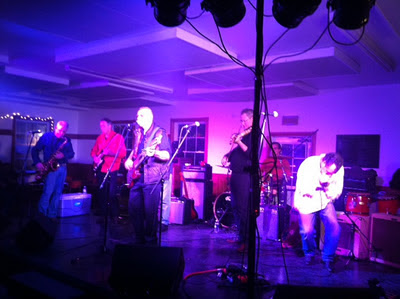
Last thing - for the blues fans out there - here's a photo taken by my friend Roger on his iPhone - it's the Stephen Barry Band, mainstays of the Montreal blues scene:
Cisco TelePresence Turns Five

I put up a short tweet about this yesterday (and if you're not following me there, well, you don't know what you're missing - sign up... @arnoldjon)- but amidst all the other things keeping me busy right now, I realized it needs more attention. Just wanted to add a few thoughts here.

So, the first question to ask now that Cisco has reached the five year milestone with telepresence is the same one I would have asked back in 2006. Aside from the fact that back then nobody really knew what to call it, I'll simply ask - is it telepresence or TelePresence? I'm still 50/50 on this one, and as a rule of thumb, when I'm talking about Cisco, it's "T", but for the category as a whole, it's "t".

Branding is just as important in tech as any other business, and if you toe the Cisco line, you will believe they invented everything around this space and by rights, then, it's TelePresence, period. Of course, they're not the only game in town, and weren't even first to market, but nobody does tech branding for business better than Cisco. The consumer market is another story, but let's not go there for now.

Whether or not Cisco is the Kleenex of telepresence - much like I used to say that Vonage was the Kleenex of VoIP - you really need to give some props here. I think they've earned it, and when John Chambers talks about making big bets and capitalizing on market transitions, I think he got it right with Telepresence. There, I said it - with a capital T.

I don't really think it matters that Cisco's lead offering is hugely expensive - they've been the frontrunners in immersive TP from Day 1, and now that Tandberg is in the fold, I think they'll stay there. It's a bit like complaining that the biggest stars in pro sports are overpaid. In absolute terms, that's absolutely true. Only whiny sportswriters care about that - it's the relative basis that really matters. So long as those athletes live up to expectations (and that's a big IF - hello John Lackey and Carl Crawford - I digress...), and big market teams like my Red Sox are willing to pay the freight, all is in balance. There are buyers and sellers at all price levels, and the market ultimately defines value. Cisco Telepresence may be out of reach for SMBs, but their book of business with the enterprise crowd is doing just fine, thank you.

That leads me to yesterday's announcement, which talks about some updates to their offering and how Cisco TelePresence can now reach a broader market. I'll save the details for another time, but the main thing is that Cisco is evolving the product as market conditions require. Again, this brings me back to why this five year milestone is worth reflecting on. We didn't have tablets or Android then, and the smartphone market was basically RIM and Nokia. You don't need me to tell you what's come along since, and that video has now become pretty mainstream for everybody.

As a result, Cisco needs to evolve its TP portfolio to cater to these new - and emerging opportunities, some of which didn't exist 2-3 years ago. Of course, Cisco would love to own every segment of the TP and collaboration market, but that's not going to happen, esp with all the free/OTT offerings out there that I've been writing about here and elsewhere recently.

Regardless, Cisco has done a lot of things right with TelePresence, and these new twists are just ensuring they'll have a place across all market tiers. More than that, Cisco wants be to remain at the innovation forefront with this technology, because if they don't, those fearsome interlopers - Apple and Google - will take their spot. I'm not saying that Cisco has all the great innovations here, but when it comes to delivering a value proposition that businesses are willing to pay for, they know what they're doing. This ground is going to be harder to defend as these other players continue to make inroads, but if anyone can to do it, it's Cisco.

Finally, for those of you sticking with me here to the end, you get a prize. If you want to step in the wayback machine to see what TP looked like at the beginning, here's a video clip I took of my first live demo at Cisco's Canadian HQ here in Toronto, back in December 2006. This clip is on my YouTube channel, which you're welcome to explore. I'm not posting video there these days - I don't know why - but wanted to share this as a sidebar to Cisco's fifth anniversary for TP. I was there at the beginning, and to show you how much interest there is out there around TP, this clip has by far received more views - over 100,000 - than anything else I've ever posted, and - as you'll see on the site, to this day, I'm STILL getting comments about that clip. How's that for the long tail of the Internet? If I could just find a way to make this pay...


Quick Spin - a nice twist from Interactive Intelligence

Back in my MBA days, where Marketing was my major, we got our share of the building blocks, like the 4P's, and if you like this stuff, it sort of sticks with you. I've always been Marketing-focused, so it made sense to me, and quite frankly, I don't think much has changed - the fundamentals are pretty universal. Sort of like when your Dad teaches you the mechanics of hitting or pitching - it just gets hardwired, and serves you well for a lifetime.

I did my MBA pre-PC, and back then, the frame of reference for most business teaching was about products and bricks-and-mortar businesses. The Web didn't exist, and software wasn't a business category. That's all changed big-time, but the fundamentals have not. One of the core mantras of marketing is ATU - Awareness, Trial and Usage. Pretty simple and pretty universal. All the front-end advertising in the world is useless if it just generates awareness. Once you have that, there is often a big chasm between awareness and usage, especially for expensive or complex products.

That leads me into a subtle segue from the 20th century to the 21st. In marketing circles, the biggest change in the new century is the rise of software, and the broader notion that we now live in a service and knowledge-based economy. Economies of scale is a major driver of competitive advantage when you're building physical products, but not so for things like software. These offerings can provide a great ROI, but take some investment in human capital to gain acceptance.

Today, Interactive Intelligence has some news that speaks very well to that. I follow them pretty closely, and last week they gave me an in-person pre-launch briefing on Quick Spin. The details were just announced this morning, and the program is set to roll out before year-end.

So, where is all this going? Well, Quick Spin is basically a free trial of their CaaS platform - communications as a service. Interactive has gone down the hosted/cloud path faster and further than just about anybody in the contact center space. They're definitely a visionary type of company, but it's not easy being ahead of the curve. The cloud has not yet rendered all that came before it obsolete, even though it may seem this way if you believe everything you read.

Again, coming back to Marketing 101, the Early Adopters get it with CaaS. They are always a minority, but see the future, and are prepared to take some early risk to gain an edge on the competition. If it works, they look like geniuses, and if not, it may ruin the business. Most companies are more conservative and would rather learn from the mistakes of others. They may lose a bit of market edge, but figure it's worth it if the 2.0 product works better and is probably cheaper.

This is where Interactive is showing its marketing smarts. They know CaaS works well - lots of customers are using it, and it's ready for broader adoption. They also know that mainstream contact centers still have reservations about the cloud, so Quick Spin helps them cross the chasm between awareness and usage. Basically, Quick Spin is a slimmed down version of CaaS, making it easy for those apprehensive customers to trial the product. Not only does it give contact center a no-cost, no-risk way to experience what CaaS can provide, but it showcases how flexible Interactive can be in delivering solutions for all types of scenarios.

While this sounds very Marketing 101, you don't see it happening very much in our space. We all know how weak the economy is, and ATU is as valid today as it was in my school days. To me, this is another example of how having the best technology is no guarantee of success. If you have it, and do all the other things right, you have a pretty good chance of leading your market. But if technology is all you have, your odds of success are pretty long, unless you're very lucky. Interactive has figured all this out, and it's another reason why they're making money. If you can't get people to buy, get them to try - and if it's as good as advertised, you'll be fine.

Metaswitch Forum revisited - a different take on UC

I tend to think differently than most about communications technologies, and hopefully that's a good thing. I'd like to believe that's what my clients think, right?

As you may know, I participated earlier this month at Metaswitch Forum, and in an earlier post shared my overall takeaways. Today, though, I'm honing in on UC.

This is the focus of my October contribution to the UCStrategies portal, and I came away from Metaswitch with some concerns that mobility's wake may push UC off course. For vendors who can readily ride this wave, they should be fine - but others may have a harder time going with the flow. I think there are some important trends emerging here, and for my take on what it could mean for UC, I welcome you to read my analysis, which is posted now on the UCStrategies portal.

Where are things going with SBCs?

That's a big question in the IP comms space these days, with the most recent news being Avaya's acquisition of Sipera. I would argue that Metaswitch's recent launch of their own SBC - Perimeta - is just as important, and both signal some new shifts in this market.

As my regular readers know, I've been following the session border controller space from Day 1, and while it's a very misunderstood market, the mainstream is finally catching up to why SBCs are important.

The SBC buzz is getting pretty loud now, and I'm glad that UCStrategies decided to do a podcast about it. I'm a bit of an outlier with this group, and boy, do they have different views on SBCs than me. Some are very technical and enterprise-centric, but have very little to do with the world I see. As a result, we had a very mixed bag about the value SBCs bring as well as the outlook for the category.

My thoughts on SBCs have been public for years, but I'm just one voice of many in this group. For that reason, if you're wondering what all the fuss is about, and why Avaya moved to take out Sipera, please give our podcast a listen. It's posted now on the UCStrategies portal, along with a full transcript.

Bell Fundraiser for CAMH - One Night Under a Blue Sky

I had a pretty interesting evening on Tuesday thanks to General Bandwidth. They're a major Bell Canada partner, and they invited me to join them here in Toronto at a special event called "One Night Under a Blue Sky". This event has nothing to do with telecom, but was definitely worthwhile.

It's a big time corporate fundraiser run by Bell for CAMH - the Centre for Addiction and Mental Health - and aside from the financial support, this goes a long way to raising awareness and understanding of mental health issues. We've become so enamored with our always-on, hyperconnected lifestyles, it's sometimes easy to forget that we're humans and not machines. If you don't think this takes a toll on mental health, I'd say you need a reality check. Anyhow, I don't normally attend black tie events, and this sure beat whatever else I had going that night.

Being a fancy gala, the entertainment was a cut or two above Medievel Times. They had two world class troupes, along with several performers covering a variety of expressive modes. Let's just say it was a heady mix of highbrow cabaret, precision dance, performance art, world music and Cirque du Soleil; along with lots of haute coutere, fire, fog and water. Not sure how else to describe the entertainment, and it took some getting used to, but it worked for me, and the performers were spectacular.

I'm sure glad I went, and hats off to Bell for getting so much support around such an important issue. Oh - if you're looking to take your next big party to the next level, you should probably get in touch with the Blue Sky House Troupe, La Salamandre, or Freedom Ballet. Just make sure you give them lots of space and don't leave anything around that easily catches fire. Anyhow, just for a taste, here's a bit of what they had going on - are you thinking Peter Gabriel?


Here's how the other half lives...


Thanks, Genband