Colonel Chris Hadfield - Lessons Learned from Collaborating in Space

It's not everyday you get to see an astronaut and bona fide space hero, but this was a pretty good way to start the week. I was invited to attend a talk last night sponsored by Cisco Canada and Allstream, and we were graced by the presence of Col. Chris Hadfield, who gave a really inspiring talk about his time in the space program. When it comes to local-boy-makes-good, he's as good as it gets for being a homegrown hero, and a world-class example of the kind of leadership Canada is capable of producing.

The event was fittingly held at the MaRS facility in downtown Toronto. While the acronym has nothing to do with the planet, it actually is home to one of Canada's leading edge innovation incubators, especially in the life sciences.

You may be wondering what this has to do with tech, but the event title provides a good clue:


The inspirational message is that there are always ways to go higher, further, faster, etc. Being out in space is the ultimate challenge for pushing the envelope, and I doubt anybody on the planet has lived this out more than Chris Hadfield.

He gave a fascinating recap of his career, and with so much of it being on the Space Station, his perspectives on team work and collaboration were great. Nations tend to be very competitive and political when it comes to space exploration, but he made some great points about how well everyone gets along out in space when you're together on a common mission. When you have to work in very tight quarters with so little margin for error, those cultural and language differences go away in a hurry.

On a larger scale, he contrasted how differently the world behaves depending on the circumstances. He showed a map of the world during WW II, identifying the Allied countries, the Axis countries and the neutral countries. It was a pretty stark reminder of what the term World War means - in real life, not some stupid video game - when nations are solely focused on defeating and/or destroying their rivals.

Fast forward two generations later, and it's amazing to see how these very same nations are united with a common purpose in space exploration. He pointed out all the various centers across the globe that share in the Space Station initiative for our collective benefit and understanding of the universe.

His main point is that in the space of living memory, this is proof that we can change behaviors on a large scale, and when we work together, humanity can accomplish amazing things.

By association, of course, both Cisco and Allstream are hoping that message sinks in with their customers. Once that link has been established, the next step is to start the Unified Communications conversation - but in this context it's on a very strategic level.

We may not have to collaborate at work as intensely as Chris and his colleagues do out in space, but the message is a strong one. Like anything else, if you have the right tools, it's much easier to achieve a common goal. Collaboration is a big driver of behavior in business today, and when UC's value proposition can be presented - and understood - as an enabling solution for this desired outcome, then I like UC's chances of success.

Time will tell, but Chris's messages were as good as it gets, and I hope Cisco and Allstream succeed in driving them into the marketplace. Cisco has been focused on this message for a long time, and last night made me think of their 2011 C-Scape event, which I attended. John Chambers gave a strong presentation on the power of collaboration, and in my post, I tied his messaging to football and deaf culture. If you have an affinity to either of these references, I think you'll find the connections I made to collaboration thought provoking, and as a small tie-in, it just so happens the deaf person I wrote about works for NASA. Again, with the right tools and frame of mind - anything is possible.

Chris Hadfield - so, a Canadian, an American and a Russian astronaut walk into a bar.... :-)

Words of the Woz and other ETS Takeaways - we need Invention, not Innovation

If that headline is all you remember from ETS, I'm a happy guy.

Am back and mostly recovered from the Energy Thought Summit, held earlier this week in Austin, TX. This is definitely my kind of town, and if you missed the basics, here is my photo summary post from Tuesday. In short, ETS was the first conference put on by Austin-based Zpryme Research, and it was a great success.

If you weren't there, not to worry. Zpryme has posted video of the sessions, both on their site and on YouTube. Just poke around there and check out whatever strikes your interest - all the sessions and keynotes I saw were great, and I still need to check out the sessions I couldn't catch.

For those who don't know, I've been active in the smart grid space for several years now, mainly due to the overlap and opportunities for players in the communications space. I've got feet planted in both gardens, and as an Advisor to Zpryme, I have an ongoing role with their Premium subscription service industry reports, and a largely behind-the-scenes role in developing the conference.

Enough preamble. Let me share with you a few key takeaways from ETS, starting first with our star attraction, Steve Wozniak.

The title of this post is the main message for me. He's totally right - we need more invention, not innovation, and he wasn't shy to say that he's concerned about Apple in this regard. For the last while, they've mainly been tweaking (perhaps milking) their iPads and iPhones, but there haven't been any game-changers. I've been saying for some time that the business market - UC in particular - is there for Apple's taking, but I highly doubt they'll go there. Talk me later about that if you like.

Anyhow, there's definitely a difference between these terms. In my view, innovation tends to be about doing old things in new or better ways, and it's usually incremental. Invention, of course, is making up a whole new game, where everyone is starting from scratch, and by virtue of first mover advantage, you get to make up the rules. We're not seeing much of this these days, but when you least expect it, invention just shows up from left field. I'm absolutely convinced that the ultimate mobile device has yet to be invented - there are pieces of it here and there, but nobody has truly nailed it. Could Apple go the way of RIM? If they're not careful and stop inventing, you bet.

If you follow my writing, you'll know that I'm skeptical about how innovation has so much cachet in today's business lexicon. It's very easy for vendors to talk about how their offerings will enable innovation, and that's exactly what execs want their employees to do. Whatever. Technology is just a tool - no different than a typewriter or pencil and paper. Real innovation comes from hard work, inspiration and the infinite power of human imagination. Furthermore, innovation is usually the product of individual effort, not groupthink, so be careful when vendors infer causal links between collaboration and innovation. I'd better stop now.

The Woz is very much a pragmatist and an everyman when it comes to assessing the value of technology. It was refreshing to hear him talk about technology and smart grid in practical terms. He's more concerned with the health of the planet than lowering our energy bills, and he kinda walked the walk by arriving at the venue in a Tesla (electric vehicle), and rolling up to the stage on a Segway - amidst the common folk, down the aisle and not from a puff of smoke on stage. Gotta love that.

Finally, for the math geek in all of us, he left us with one of his ruling principles of life:

H = S - F

Got that? I don't know if he uses this for all his other talks, but I loved this one:

Happiness Equals Smiles Minus Frowns

So simple, but so hard to do. This could only come from the left coast, but I'm with Steve 100% on this one.

Otherwise, there were many other highlights, and I want to quickly share three here:

1. Andres Carvallo moderated the Smart Grid Realization panel, and while a lot of the dialog was dry, I took away one strong message - you need a strong grid before you can have a smart grid.

Well said, and it applies equally well to the communications space, especially with the big rush to the cloud. Do we really know how strong it is? How much has it really been tested? Don't all those security breaches worry you? Is there enough regulation in place to ensure a strong foundation? Do we have the right regulations and policies, or does this need a rethink?

These questions were certainly relevant at ETS, as the panel cited how emerging economies are making smart grid investments based on a weak foundation. The North American grid is aging, brittle and not very flexible. It performs very well most of the time, but not all of the time, and needs a major overhaul to keep up with how our needs are evolving.

2. Karl Popham moderated the electric vehicle panel, and joining him were speakers from major auto makers.

A core issue is how best to support consumer preferences when it comes to choosing between a conventional vehicle and one powered by electricity and/or batteries. I found strong parallels here between the need for telecom vendors to offer premise-based and cloud-based UC/VoIP, and the challenges faced by the channels in selling them.

Related to that is the existential threat raised by the likes of Tesla, who cannot access the existing channel system run by the dealers. It's prohibitively expensive to build their own dealer network, so they have to be creative- INVENTIVE - and find new routes to market. This is exactly why you see them on display in shopping malls - you have to create awareness before you can create demand, and an awful lot of people are discovering Tesla while out at the mall. Clearly, the crowd at ETS didn't need any help, and we had a real AHA moment, when the audience was asked if there should be an easier way to buy a Tesla. The reaction was an emphatic YES, and if you believe that the auto dealership model is broken in terms of providing choices that consumers want, this was a pretty good indication.

3. Keynote from John Scott of NASA

Another big highlight, especially for the space exploration fans and scientists out there - and there were plenty. Most of what he talked about was too much hard science for me, but there was one segment that really resonated. Mr. Scott presented a compelling breakdown of the timeline for how the atomic bomb came to be. Most of us know the high level history of the Manhattan Project, but he went deeper to explain how the science was developed, particularly in the context of how WW II  was unfolding.

Nothing drives the need for invention more than the threat of being conquered - forget about innovation - and before 1939, the idea of an atomic bomb was simply inconveivable. I loved the way he outlined the chain of events, tests and discoveries that unfolded during this process. When you consider the state of science up that point, it's incredible to see how much can be accomplished during the six year timeframe it took - starting with some vague hypotheses to full realization, and thank God we got there before the Nazis.

Most everything we do today with our "smart" phones is laughably trivial compared to this, and considering they didn't have computers or the cloud back then, I'm not sure we've evolved much as a species. Coming back to Steve Wozniak, we have fantastic tools today to truly make the world a better place, but the masses just want to play games and chat on FB. You'd like to think there would be a lot more invention happening, but innovation is just easier. Of course, invention is happening in disciplines like life sciences, and I think we're going to see more of that in smart grid once the grid gets stronger. In the communications space, I'm not so sure, but I'll save that topic for another day.

Thanks for bearing with me here. Your reward - a smiling Woz and another fun musical moment from ETS.

Very accommodating during the press session after his keynote. Got his biz card too - metallic - very cool.
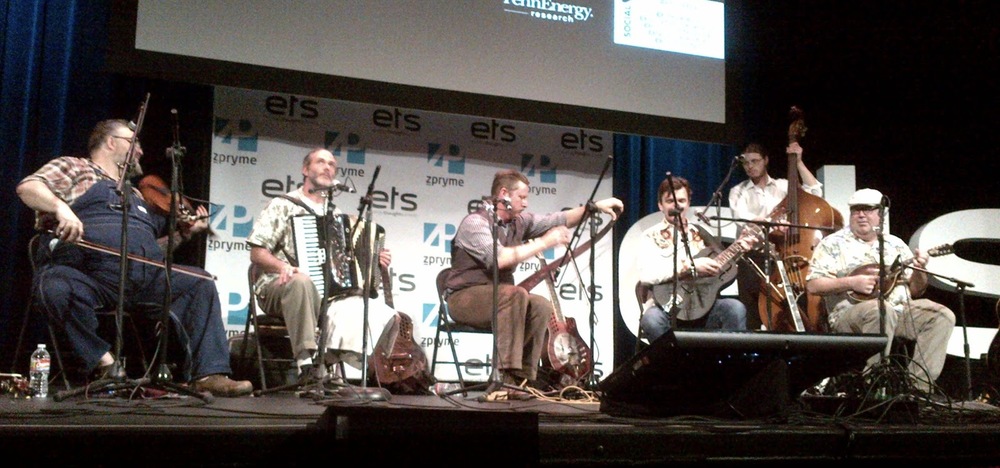
 The Hot Nut Riveters. They were great - and yes, the guy in the middle is playing a saw - how's that for invention?


ETS - Quick Highlights

Just have a short window to share some photos of Day 1 here in Austin at ETS - the Energy Thought Summit. This is the inaugural event put on by Zpryme Research, and I have been playing a quiet role, mostly behind the scenes. They've really put a great lineup together, and delivered a solid day of content, with a strong touch of Austin-style hospitality. Translation - lots of live music, courtesy of several local performers, for which Austin has an inexhaustable supply.

Will have more comments in a follow-up post, and just wanted to share a few photos of Day 1. I'm one of the MCs for Day 2, so will be pretty tied up most of the day here.

Otherwise, I'll steer you to Zpryme's website, where they've been posting streaming video of the sessions. Needless to say, the photos there will be much better than mine! They've done a great job documenting the content, and just as importantly, sharing it. Enjoy.


The Paramount is a 99 year old theater - fantastic place and great history. The prep area below the stage has a lot of character, with the walls covered with autographs and messages from performers. It's a bit like inside the scoreboard at Fenway Park where ballplayers leave their autographs wherever there's space. Here's one part with Carol Burnett and Woody Allen's momentos.


Andres Carvallo, welcoming everyone. He's been the main face of the show and he's everywhere.

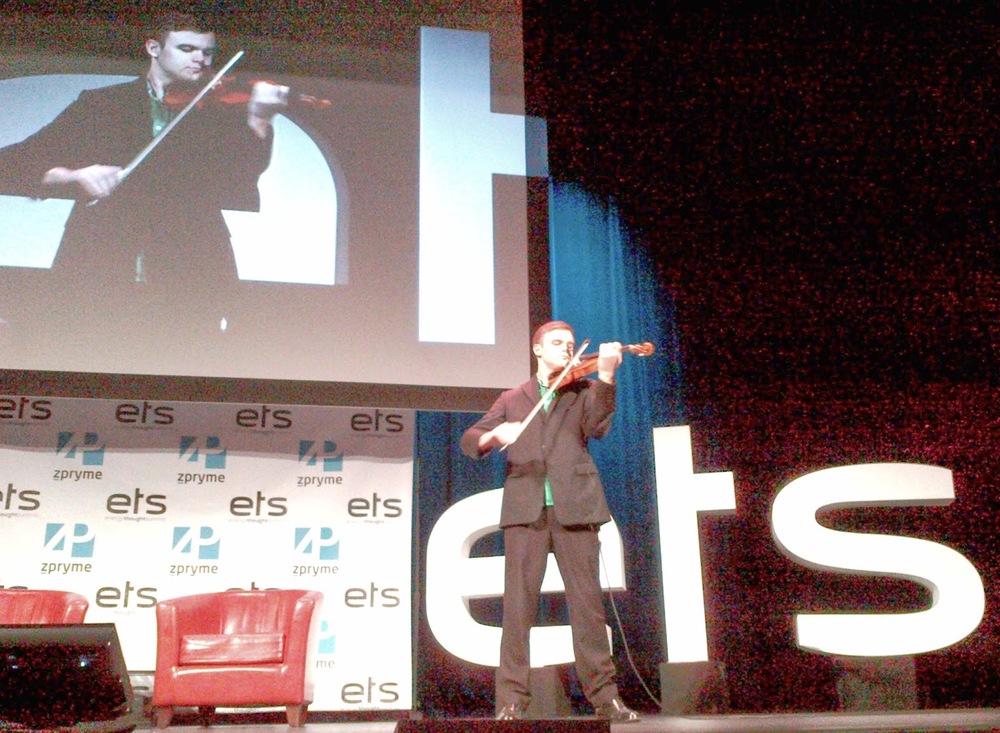
This is how you open an event in style - Austin style. Below is Caleb Hans Polashek. He's the youngest tenured member of the Austin Symphony Orchestra, and he performed two original compositions - lucky us, huh?

You might expect to see this in New Orleans, but no music is out of place in Austin. This was part of the buildup to Steve Wozniak's keynote. He was driven up to the venue in a Tesla, then entered the venue from the front door all the way down to the stage on a Segway, and ushered in with this marching band. Tough act to follow, and he was great.


View from the balcony. They don't build theaters like this any more - beautiful!


Professor Massoud Amin, keynoting later in the day. If you remember the Smart Grid Summit events I used to run, you should recognize Massoud. He was good as always - great sense of history and perspective on tying the big issues together.


Next stop - ETS in Austin, TX

Travel has been light so far this year, but starting next week, I'll be on the go a fair bit more.

Next Monday and Tuesday is ETS - the Energy Thought Summit. Wearing my smart grid hat, I've had an active role with my partners at Zpryme Research. Conferences take a long time to put together, especially when it's your first, so I've been adding more than my smart grid expertise, mostly behind the scenes.

Our hard work is poised to pay off next week, and if you're coming, am sure our paths will cross. I won't be hard to find, and will likely end up moderating a panel or two. Also, I'm the MC for Day 2.

Registration is peaking now, and we have a first-rate lineup of thought leaders to make this worthwhile for anyone who wants to know where smart grid is headed. There will be several communications and IT-related tracks, including one on cybersecurity, which I'll be taking in for sure.

If you don't know by now, Steve Wozniak is our marquee keynoter, and he's speaking Monday morning at 10am. For the rest of the program and roster, check out the event website, and it's not too late to make plans.

Amazon Mayday and the Toronto Ice Storm

These references may sound a bit obscure, and that's understandable. If you don't live in Toronto, you probably don't know about the Ice Storm we had, plus it occurred three months ago. Hopefuly, you know about Amazon's Mayday button, so let me connect the dots a bit more.

I'm posting here about my monthly column that I write for TMC's Internet Telephony Magazine, Rethinking Communications. Print publishing has long lead times, and while this article was written in the wake of the Toronto Ice Storm, it's only just been published today in the digital edition of the magazine.

If you lived through the Ice Storm, then my analysis would be very appropos for how the concept of Amazon Mayday could have helped ease the anxieties around what happened. We've long since gotten over the storm, but the ideas are still highly relevant for any utility, and incidents like this happen all the time.

In general, utilities have a lot to learn about customer service, and the thinking behind Amazon Mayday could really help raise the bar. That's the main connection I'm trying to make, and if that piques your interest, I hope you read my article. As always, comments are welcome.

Top 100 Tech Podcasters as per GetVoIP - me and 99 Others!

GetVoIP.com follows our space pretty well, and while their main business is being a channel/resource for buyers of VoIP, they provide some good content. Some of it they generate themselves, and some comes via industry watchers, myself included.

Everybody likes a top 10 list, and GetVoIP produces these from time to time, with the latest one coming yesterday. This was the top 100 "tech podcasters to follow on Twitter", and I'm happy to say they've included me, along with colleagues such as Blair Pleasant, Dave Michels and Don Van Doren. There are many other familiar names as well, along with others I don't know, so if you're looking to broaden your horizon of thought leaders in this space, you should check out their list.

CTCA Spring Conference - Will be Speaking There

Things seem to go in waves for me, and after staying put for a while, I have a conference later this month, three in April and two so far in May. I'll be quite busy with ETS later this month, and first up in April is the CTCA's annual conference.

We've had some near misses the past few years, but this time around the calendars have lined up, and I'll be participating at their 2014 event, April 8-10, in Gravenhurst, Ontario. It's relatively local for me, and being held at a nice resort, it should be a great destination for attendees travelling from across Canada.

CTCA is the core community of telecom consultants here, so there's no better place to read the state of how communications technologies are being deployed in Canada. I'll be doing my part by giving a keynote to kick off the conference, and moderating a panel on the cloud later that day. For my keynote, I'll be talking about five themes and trends that are shaping the telecom landscape, and that should set the table nicely for the rest of the conference.

The cloud panel should be fun, as we have a mix of operators and vendors - Rogers and Cogeco, along with Interactive Intelligence and NEC. My keynote is at 9:15, and the panel rounds out the content for Day 1 at 4:15. Here's the link for the full agenda, along with more detail about each session.

I'll have more updates as the date gets closer, and hope to see some of you there!

ETS - Energy Thought Summit - March 24-25, Austin - Coming?

As ETS gets closer, I need to wear my Smart Grid hat a bit more often and do my part to support and promote the event. My partners at Zpryme Research have done a great job putting the program together and drawing together a first rate lineup of thought leaders. If your goal is to learn from the best and brightest, this event is for you. It's not a trade show and we have a limit on how many attendees can participate.

In terms of star power, from the tech world, SteveWozniak needs no introduction. I'm involved in Smart Grid because of the rich intersection between communications technology and the evolving energy sector. Bridging Steve's perspective to the world of Smart Grid, we have thought leaders from across the full spectrum, including George Arnold, Andres Carvallo, Massoud Amin, Rajit Gadh, Mei Shibata, Emir Macari, Becky Harrison, Ken Laberteaux, and many others.

The speaker lineup alone is reason to come, but so will be the learning from the sessions and of course, the invaluable networking that comes from being in this intimate setting for two days. I'll be there in plain view, likely moderating a couple of panels, and will serve as the event MC on Day 2.

I'll do my best to keep this on your radar, and for full event and registration info, here's the ETS website.

Role of Multichannel in the Contact Center - UCS Podcast

Posting has been a bit behind on the UCStrategies portal, but the most recent podcast has now been added. The topic was the role of multichannel in the contact center - what technologies are being used, how well it's working, how well trained are the agents, etc.

It's a rich topic about a complex challenge, and we had lots to say about it. I only commented briefly, but there are many perspectives worth hearing, and the moderator, Don Van Doren, managed to make room for everybody. Here's the link, which includes a transcript if you'd rather just read what was said.

February Writing Roundup - My Top 8 Picks

Thought I'd start doing a monthly roundup post for my followers who don't religiously read every single post or article of mine. As you may know, I write in a variety of places, and I don't expect anybody follows them all - although you really should! - and even if you wanted to, you may not know where to find them.

On that note, if you don't know, a handy reference would be this page from my website. You might want to bookmark that.

Aside from Ziff Davis, the links there take you to my profile page where you can see an archive of my current posts - UCStrategies, ADTRAN, InformationWeek and Internet Telephony Magazine. For now, Ziff Davis is a challenge, but I will be getting a profile page there soon. Until then, the only way to see my writing there is to follow my tweets (@arnoldjon). I post there 2-3 times a week, and I tweet whenever there's a new article.

With that out of the way, this roundup post is for people who like my writing. I plan to do a monthly digest, so in one place you can click and read what I consider are my most notable posts for that time period. My intention is for you to get a fuller sense of the topics I write about - aside from my regular posts here on this blog - as well as the various outlets I share content with.

So, here are 8 posts from last month that showcase my latest thinking on the IP communications space:

All You Need is Lync - InformationWeek (if you like that, read this too)

How Bob Newhart Would Respond to UC - UCStrategies

Amazon Mayday - What it Mean for Your Contact Center - Internet Telephony Magazine, Jan/Feb issue

External Risk - Another Layer to Consider with UC - ADTRAN Blog

Is VoIP Putting Your Network at Risk? - guest post on No Jitter (more here on VoIP security)

Evolution of VoIP and Early Beginnings - Toolbox.com (Ziff Davis)

No Office? No Problem! Decentralize Your Phone System with Hosted VoIP - Toolbox.com

What you Need to Know About POTS vs PBX - Toolbox.com

Evolution of VoIP Webinar, Tomorrow at 2 - Join Us!

Just a quick shout-out for my next webinar with Ziff Davis B2B. It's tomorrow at 2 ET, and the title pretty much says it all. If you want an overview of how we got here with VoIP, along with why it's a great time to be using it, you'll want to be there.

You can get there from here, and I hope to see you on the call!

All You Need Is Lync - Altogether Now...

Lync is all you need, Lync is all you need.

You can't get that out of your head now, can ya? Music is my thing, and I just thought that title worked really well for what Microsoft was messaging at last week's Lync conference, or love-in, if I was keeping in character with Sgt. Pepper-era Beatles.

On that note, I'm not the only one who likes to link (or Lync - ugh) past and present with the Fab Four. Did you see this 2 minute rave-up on Jimmy Fallon the other night? - a little too cool for comfort, but spot-on...


Back to the topic at hand - Lync. For this month's column on InformationWeek, I wrote about how a lot of good things are coming together for Lync, but interestingly, they seem to be more focused on video than voice, which of course speaks loudly for how they see the world moving without the need for phone systems.

I'm equally concerned that whether they focus on voice or video, MSFT and their telecom partners/rivals might miss a bigger boat, namely Facebook. Having bought WhatsApp, they now have a huge user base on par with Skype, and by adding voice the other day, things sure could get interesting if people start relying more on text for their primary mode of communicating.

Enough. It's time to head over to the IW site, and you can read my article here. If this gets you going, please join the conversation, and I'll be sure add more thoughts in the commentary.


How Bob Newhart Would Respond to UC

If you follow my writing, you'll know that I often talk about the challenges of getting end users to see what vendors and IT people see in Unified Communications. The value proposition is intuitively strong, but the benefits are pretty fluid for most people to grab on to.

For this month's UCStrategies column, I'm taking a different approach with some humor. Millennials may not know much about Bob Newhart, but that will change after reading my post. For those of you old enough to remember, no explanation is needed, and I think you'll totally clue in to what I'm doing.

Just imagine how a telephone conversation (of course, what else could it be with UC?!?!) would go between Bob as an end user, and Walter the IT manager. Got that? Now flip over to the UCS portal, and have a read and listen to my post.

ETS is Coming - Energy Thought Summit, March 24-25

I'm part of the team at Zpryme Research that's putting together our first smart grid conference. If you're in this space, you will not find a better lineup of speakers anywhere, and this is truly shaping up to be a great event.

If you've never seen Steve Wozniak speak, this is your chance, and with my discount code, you'll save 20%. You can read up on the full lineup of speakers and sessions here, along with registration details.

The discount code is: ETSjon, and I hope that helps get you to Austin!

I'll be blogging and tweeting regularly prior to the event, and if you join us, I will not be hard to find.

Google Hangout - Future of the Contact Center, Feb. 27

It's so rare that I get involved in local events, and go figure, when it happens, we're doing a Google Hangout. Well, it's snowing pretty good today, so just as well to stay in!

Whatever, I'm just happy to be here, and Toronto-based Fonolo is hosting another analyst roundtable next Thursday at 2pm ET. Not only is it good to see a local vendor bringing much-needed innovation to the contact center space, but also that they're making use of the new tools.

For events like this, there's absolutely nothing wrong with Google Hangouts, and if you're in tune with what works for Millennials, don't be surprised to see this become a standard contact center option before long.

Fonolo's President, Shai Berger is leading the roundtable, and joining us will be fellow analysts Blair Pleasant, Dan Miller, and Keith Dawson. Should be fun, and in the open-ended spirit of all things Google, the roundtable will go as long as folks care to hang out.

Here's the link with full details and the registration form - hope to see you there!

Webinar - Increasing Customer Engagement in the Contact Center

I mentioned the other day I've got lots on the go, both with webinars and upcoming events. This post is for a webinar that had a false start recently, but has been rescheduled and upsized.

This time around I'm the moderator, and if you want to hear some best practices about creating customer engagement in the contact center, you'll want to join us next Thursday, February 27 at 2pm ET.

Joining me will be Neal Shact from CommuniTech Services (an SAP Partner), Sandy Reisenauer from Wacker Neuson, and Sandeep Arora from Knack Systems.

The webinar is being hosted by TMC, and is titled: The Search for the Holy Grail: The Journey to Increase Customer Engagement with Personalization in the Contact Center. I can't make it sound any sexier, but if you want to know more, here's the webpage, along with a link to register.

Next Webinar: Evolution of VoIP, March 4

Things sure go in waves for me - it's quiet for a while, then busy, and then new things to become even more busy. The last state describes what this week has been like, and all of a sudden, there's a whole lot of new things going on, and I'll be posting about them here as events develop.

I've got a few upcoming webinars, and in this post I'll just talk about one of them. On March 4, I'm doing another Ziff Davis webinar on the evolution of VoIP. This one has been on the calendar for a bit, and early registrations have been great, so it will be well-attended for sure.

As you may know, I'm a regular contributor to IT Toolbox, which is a major Ziff Davis hub for B2B content. They cover the gamut in terms of topics and modes of content, including webinars. For more details about my VoIP webinar, along with how to register, here's the landing page. Hope you can join us!

2014 VoIP Outlook: Analyst Roundup (including JAA)

Industry portal GetVoIP is one of many out there providing information to help people make buying decisions about VoIP. These sites often provide lots of pricing and feature comparisons, and it's nice to come across one that actually provides some independent analysis.

GetVoIP's CEO, Reuben Yonatan came up with a good way of doing this - soliciting insights from various industry analysts about what we see in store for businesses as they consider VoIP in 2014. I was included in this group, and our collective wisdom has been rounded up in their 2014 Outlook post.

I've been away a few days and just back to blogging now. Their 2014 outlook ran earlier this week, and if you haven't seen it yet, here's the post. Am sure they'd welcome your comments, so don't be shy.

VoIP Security and Cybersecurity in the Spotlight - are you Listening Now?

Well, that's certainly been the story for me lately, and it's as good a time as any to post about it.

Starting with this week, I was interviewed by both the Globe and Mail, and the Toronto Star about a cyber attack that hit Bell Canada a few days ago. More specifically, the attack hit one of their third party partners, and the hackers posted the usernames and passwords of over 20,000 business customers on the Web, along with credit card numbers of business customers.

This may seem like small potatoes compared to the recent breaches among the likes of Target and Neiman Marcus, but it all comes from the same swamp, and until we - you and me - get smarter about how we protect our personal information online, this activity is going to keep escalating.

Working with third parties is a fact of business life these days, and as a sidebar, it's good to know that the unnamed partner was based in Ottawa - and not some faraway country you've never heard of. With the Sochi Olympics about to kick off - in a faraway city you had never heard of before they got (I mean bought) the games, concerns about surveillance - and that's saying it nicely - have never been higher.

Not to mention closer to home, where the Canadian government is trying to assure us that the metadata they're monitoring NSA-style on our mobile devices is not spying. Makes you just want to walk away from anything related to the Internet. I'm almost there, and looking at the copper wiring still stapled around the perimeter of my apartment, y'know, I could just about do it - all I need now is a rotary phone....

Anyhow, back to the news - for the record, I was quoted here in the Globe on Monday, and here in the Star yesterday.

Now, let's take things down a notch from cybersecurity to VoIP security. If you don't associate VoIP with security, then you need to think again. Not only is VoIP highly vulnerable to threats for telephony-based security like toll fraud, but it's often the weak link in the overall IT security perimeter. This makes it an attractive point of entry for hackers going after much bigger game, and that's when this becomes a cybersecurity threat.

You may save a ton of money on telephony with VoIP, but if you're not careful, you'll be exposing all your corporate data to a community with very sophisticated tools - along with some that are free or OTS - and they know how to use them. As Bell Canada found out, once the breach has been detected, the damage has already been done. Like anything else, when a competitive advantage can be established, you win more than you lose, and in this arena, the hackers have the edge.

On that note, I'll continue the theme of being newsworthy with a profile that ran yesterday in IT World Canada. I recently authored a White Paper on VoIP security for an Ottawa-based company called VoIPshield, and the publication ran a nice backgrounder on them, along with some context for why VoIP security is an issue. The article also interviewed their CEO, Rob Gowans, and he added some color to Howard Solomon's analysis.

Regarding my White Paper, it's getting a lot of readership, and you can learn more it about from my earlier post when it was published in December. If you want a condensed read about what your really need to know, I can steer you to a couple of articles; this writeup from FierceITSecurity, and my own article about the topic which ran about two weeks ago in No Jitter.

I'm not a technical expert in this area, but I see enough in my research to know these threats are real and they're with us now. With all the above items bubbling up around the same time, I thought it was high time to pull them together and help get the word out.

Are you listening now?

ITExpo Miami - Key Takeaways

I've been to many ITExpos over the years, and while there's a sameness to many elements, there's always something new. This year, for me, the newness was seeing Martin Geddes speak at the SmartVoice track on Tuesday. He's long been one of my favorite leading lights for where voice is going, and it was great to see him in person. It's all about "Hypervoice" with Martin, and while I still don't totally get it, I absolutely get the future he's trying to envision for us.

Basically, the idea is that many elements that could make voice cool exist today, but they just haven't been pulled together in a neat and tidy way. With Hypervoice, the idea is that the whole is greater than the sum of its parts, so when you combine things like voice recording, biometrics, on-the-fly conferencing, etc. into a unified package, it's a pretty strong value proposition.

The big challenge is that you'll never get there if you think of VoIP as telephony - and that's something I've been writing about pretty extensively lately. The picture comes into focus when you first see VoIP as data, and from there, you see it as information instead of voice. There's an awful lot of data locked up in a VoIP session, and voice is just one of many ways to slice and dice what's possible. This takes us a bit into the world of Big Data, but that shouldn't scare you - too much.

In short, telephony doesn't have a future as a commodity, hence the rallying cry from the session - "voice is dead, long live voice as data". I'm kind of on board with that - I think telephony is dead, but once reinvented, voice has a great future, and Martin is a top guy to follow for what that future holds.

Well, this just takes me to the first two hours of the show, so I'd better move on.

What else to say? Based on what kept me busy, I moderated two sessions on the contact center, and despite all the great technology around us, it's astounding to hear how hard it is to provide great customer service. There are a lot of reasons for this, and interestingly, I'm of the opinion that the technology isn't one of them. The bigger culprit, at least from what I'm seeing is the lack of a customer-centric culture. When you look at what great companies do in terms of customer service, you don't hear them talking about their technology. You hear them talking about a value system that runs through their organization, where everyone in essence is a customer service representative where nobody is afraid to deal head-on with customer issues to make them happy.

As such, my takeaway here is to not get too distracted by all the great contact center technology on offer at the show. These vendors know what they're doing and their solutions are only as effective as the company's commitment to customer satisfaction. When businesses get too caught up in the process of customer service rather than the outcomes, things get impersonal pretty quickly, and at that point, all the Big Data in the world isn't going to be of much help.

Otherwise, it was great to see the TMC brain trust giving presentations, which we saw during the always-informative SIP Trunking workshop run by Ingate Systems. We heard from Rich Tehrani, Erik Linask and Peter Bernstein, with the collective message being that SIP is gaining traction for good reason. Our world is increasingly a multimedia one, and it's easy to forget that SIP was designed for this purpose - it's not just for voice. Of course, this ties into WebRTC, another hot topic at the show. It's not clear yet how the channel will make money there, but this workshop is very much about how they can make money with SIP trunking and all the UC-related applications connected to it.

Got one more thing to touch on before this post runs too long - Big Data. I've got a lot of skepticism on this topic, but yesterday's CIO Roundtable provided some glimmers of hope. TMC did a great job bringing together three CIOs to share their Big Data journeys and lessons learned with us. Clearly, there's no magic formula, as every business will come at this differently. What struck me was the customer-centric nature of these businesses, and that simply reinforced what I was saying earlier about contact centers.

A key idea for me was the observation that Big Data only becomes relevant when businesses understand the value of the data they already have about their customers.You might assume this was always the case, but it's easy to dismiss everyday information about your customers as being noise if you take them for granted. Instead, when you realize that every touchpoint with customers can either create or destroy value around your relationship with them, these become valuable "moments of truth" where it's better to be right than wrong.

When you've reached that point of enlightenment, it becomes much easier to develop a strategy around using data to understand the customer in more meaningful ways. We heard the panelists talk about leveraging Big Data to anticipate - or even predict customer behavior - and by doing so, you can be proactive with your customers instead of reactive, jumping whenever they have problems. A key payoff here is the idea that you can add more value to your offerings, especially by making them more personalized. Without Big Data, you could still do this, but you'd be guessing, so that's not a good long-term plan.

Putting a number on all this is still pretty hard to do, but one of the panelists summed it up best - "the ROI for Big Data is a better customer experience". This sounds simple, but if you're truly customer-centric, this is exactly what you're looking for. When you can deliver that to management, the associated metrics that they really want to see won't be so hard to extrapolate. Big Data is very much a brave new world, but these speakers showed us there is a way forward.